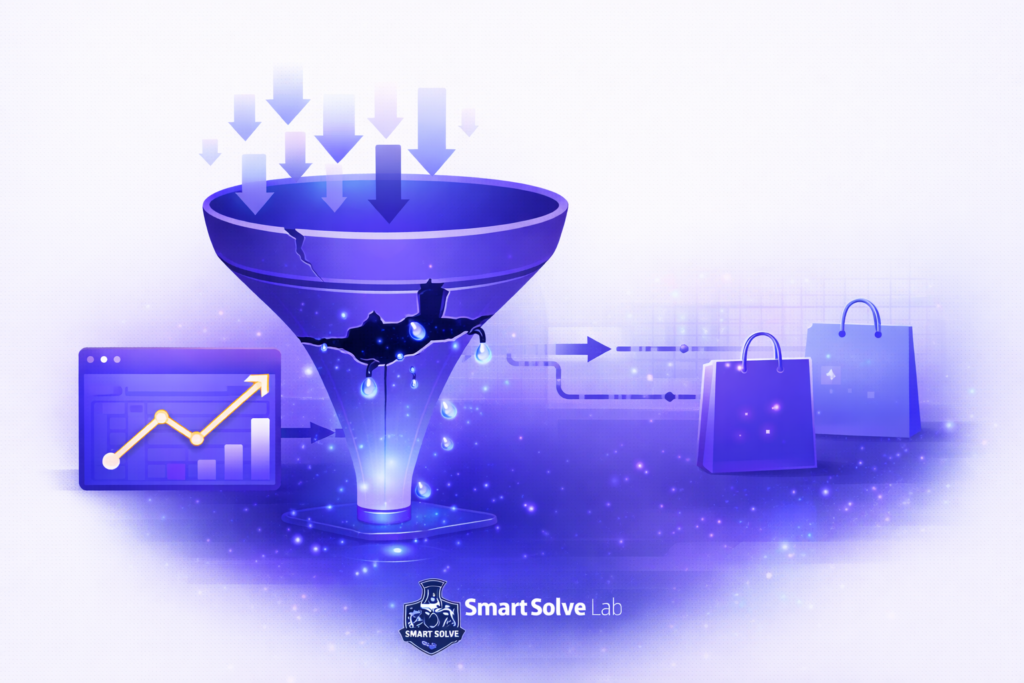
your sales funnel is not converting and where customers are leaking. Learn how structural funnel gaps affect conversions and how to fix them.
Many businesses invest significant effort into building marketing funnels.
Landing pages are designed carefully. Advertising campaigns attract visitors. Email sequences nurture potential buyers. Each stage of the funnel appears structured and intentional.
From the outside, the system looks functional.
Traffic arrives.
Visitors move through the funnel.
Yet a frustrating result continues to appear.
Conversions remain low.
People enter the funnel but rarely complete the journey. Prospects read the page, explore the offer, and sometimes even show interest, yet the final step never happens.
For many organizations, this experience is confusing.
If traffic is arriving and the funnel is technically working, why do so many potential customers disappear before converting?
The answer usually lies in structural misalignment within the funnel itself.
A funnel is not simply a sequence of pages.
It is a decision pathway that guides attention toward trust, trust toward confidence, and confidence toward action.
When this pathway contains friction, visitors hesitate.
And hesitation causes leaks.
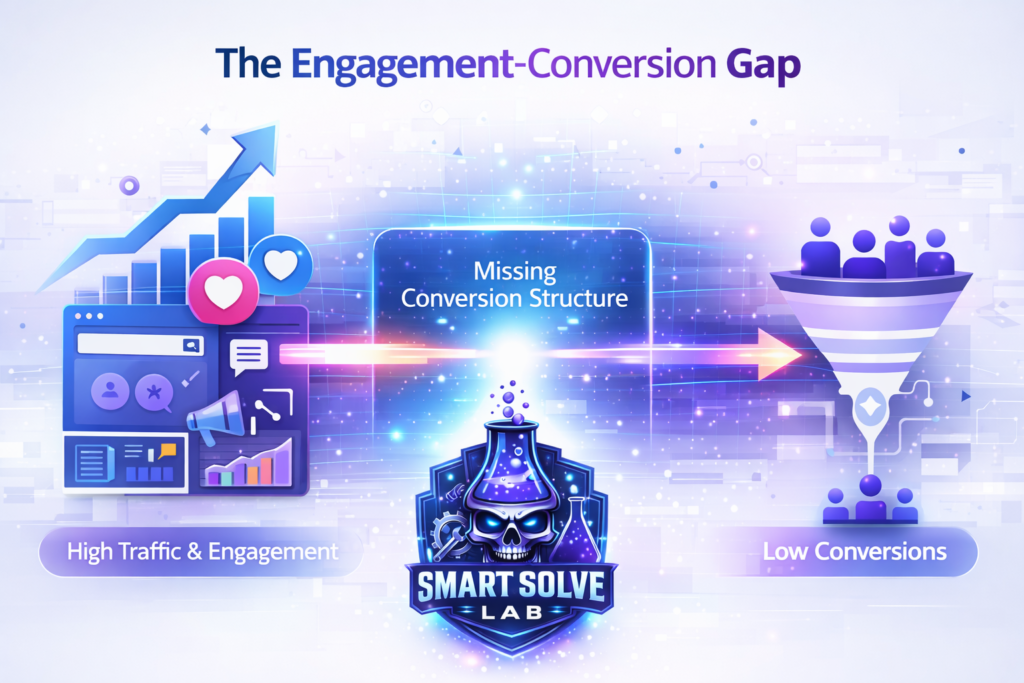
This is why many funnels attract attention but fail to produce consistent conversions.
The problem is rarely the existence of the funnel.
The problem is the invisible structural gaps inside it.
Many organizations attempt to solve this issue by making surface adjustments.
They change headlines, redesign buttons, experiment with pricing, or test different calls to action.
While these changes can occasionally improve performance, they rarely address the deeper structural reasons why visitors hesitate inside the funnel.
Understanding why sales funnels fail to convert requires examining the system behind the funnel rather than focusing only on individual pages.
Funnels succeed when the stages guiding the visitor from curiosity to decision operate as a coordinated system.
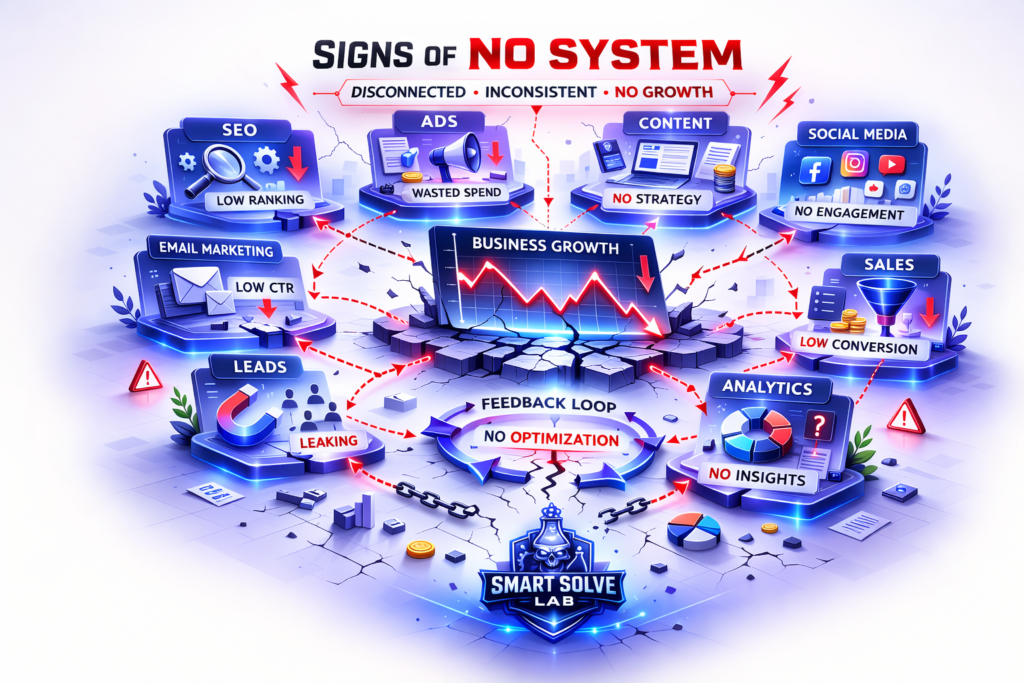
When these stages become misaligned, the funnel begins losing potential customers at critical moments.
Research from HubSpot marketing research shows that most funnel conversion problems originate from structural friction between stages rather than from isolated design issues.
Recognizing these hidden leaks is the first step toward stabilizing funnel performance.
Once the structural breakpoints become visible, businesses can begin strengthening the pathway that transforms visitor interest into confident decisions.
Table of Contents
The Funnel Conversion Illusion
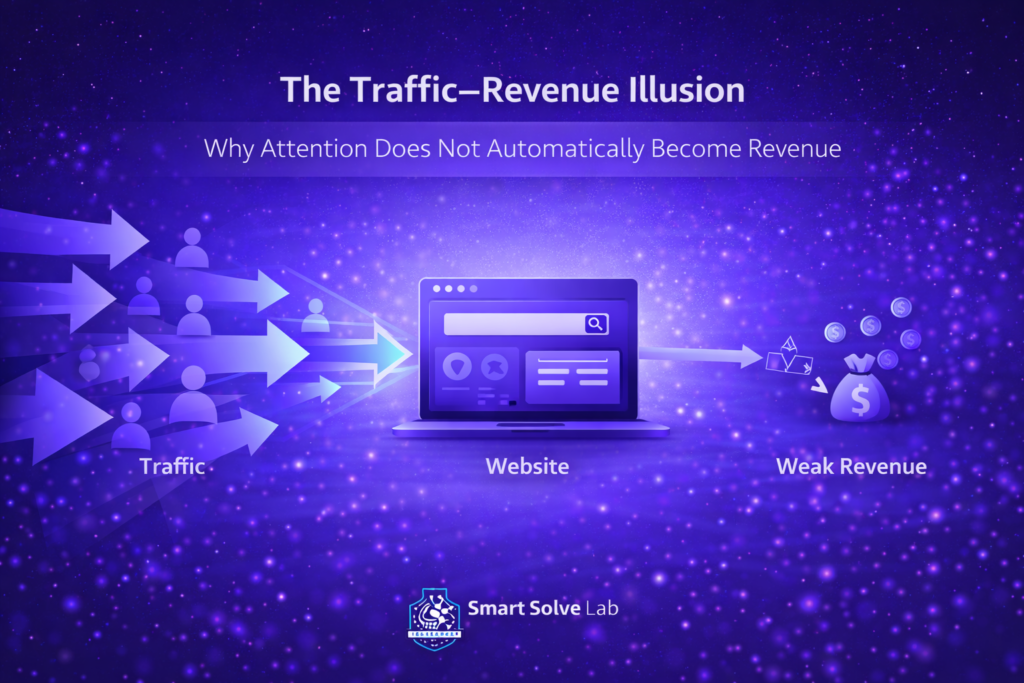
Many businesses believe that once traffic enters a funnel, conversions should follow naturally.
The logic appears simple. If visitors click an advertisement, read a landing page, and explore the offer, at least some portion of them should eventually become customers.
However, funnel performance rarely behaves this way.
A funnel does not convert simply because visitors pass through it.
Conversions occur only when the stages inside the funnel guide the visitor toward increasing confidence and clarity.
When this progression becomes inconsistent, funnels begin losing potential customers.
This creates what can be described as the funnel conversion illusion.
Traffic enters the system, yet conversions remain unstable.
Organizations experiencing this problem often assume the issue lies in the volume of visitors.
They attempt to generate more traffic, increase advertising budgets, or expand promotion channels.
While these actions may bring additional visitors into the funnel, they rarely solve the underlying conversion problem.
The real issue often lies inside the decision pathway itself.
Visitors may become interested in the offer but encounter subtle friction before completing the purchase.
The message may change between pages. The value proposition may become unclear. Trust signals may weaken at the moment when confidence should be strongest.
These small structural inconsistencies create hesitation.
And hesitation is one of the most common reasons funnels leak customers.
Businesses facing this challenge often benefit from applying a structured digital growth system approach that examines how each stage of the funnel reinforces the next.
Instead of focusing only on isolated funnel pages, this perspective evaluates the complete pathway guiding the visitor from discovery to decision.
Research from HubSpot marketing research suggests that funnel conversion problems frequently occur when stages within the customer journey fail to reinforce one another consistently.
Understanding this illusion helps shift attention away from traffic volume and toward the structural alignment inside the funnel.
Why Funnels Lose Customers Even When Traffic Is High
Many funnels appear functional because visitors enter them regularly.
However, the presence of traffic does not guarantee that the funnel itself supports confident decision making.
Visitors may show curiosity without developing enough trust to act.
They may understand the offer without feeling certain about its value.
Or they may hesitate because the pathway toward the final decision feels unclear.
When these conditions exist, potential customers quietly leave the funnel without converting.
Recognizing this pattern allows businesses to begin diagnosing where those invisible leaks occur and why the funnel fails to transform attention into action.
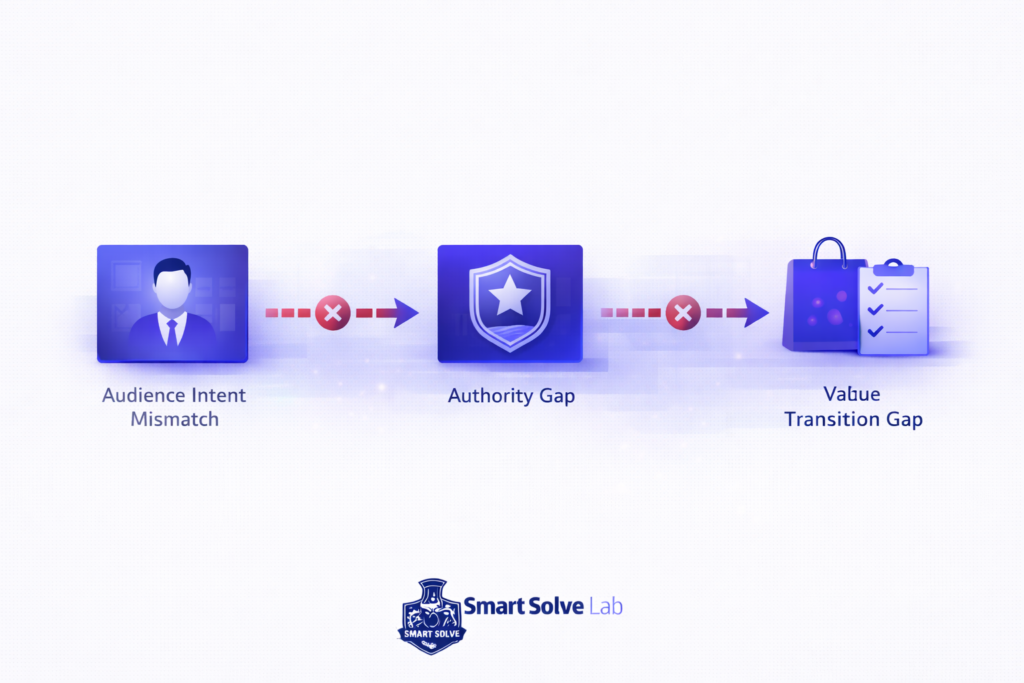
Structural Breakpoints Inside Sales Funnels
When funnels fail to convert consistently, the issue rarely exists in a single page or design element.
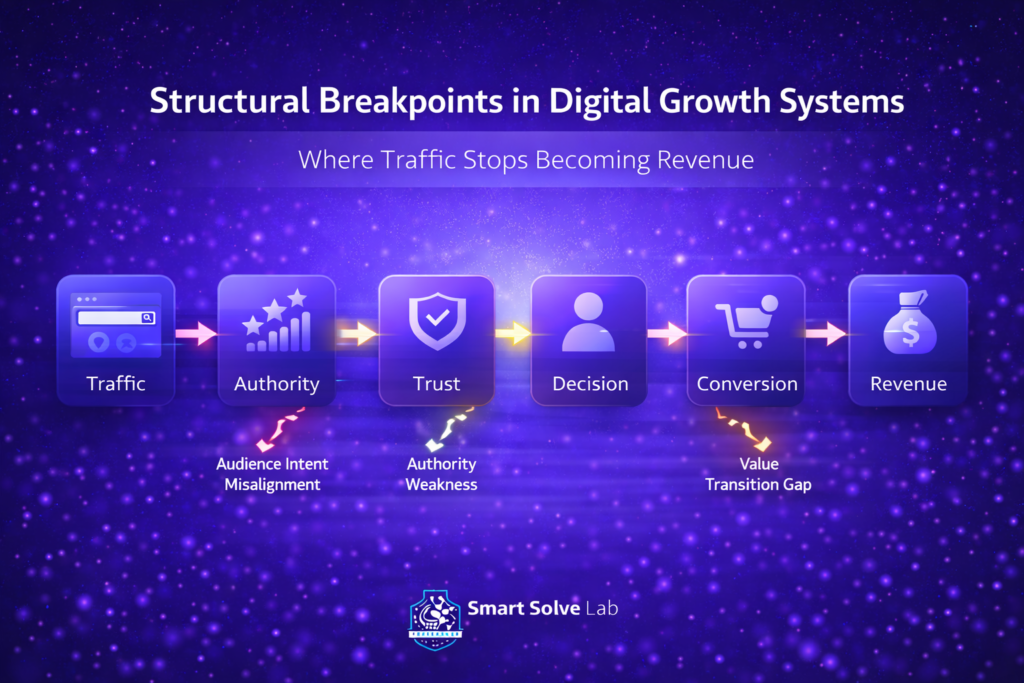
Most conversion problems originate from structural breakpoints inside the funnel journey.
A funnel is meant to guide visitors through a sequence of reinforcing stages. Each stage should strengthen confidence and move the visitor closer to a clear decision.
When one of these stages becomes weak or disconnected, the funnel begins losing potential customers.
Understanding where these breakpoints occur allows businesses to diagnose why visitors disappear before reaching the final conversion step.
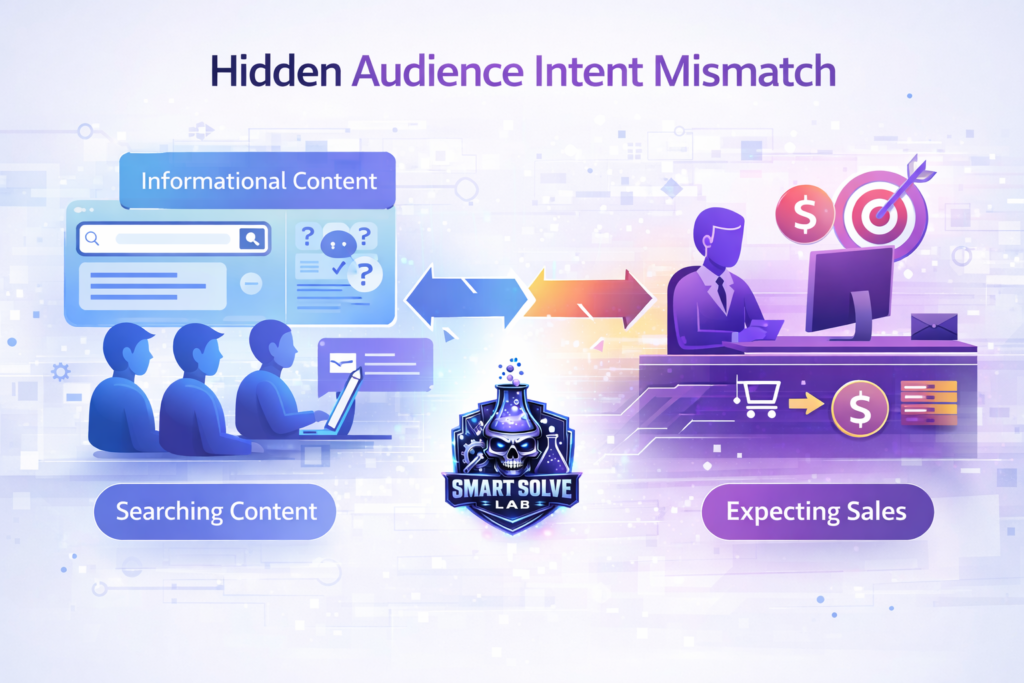
Breakpoint 1 — Audience Intent Misalignment
Many funnels attract visitors who are curious but not ready to buy.
This usually happens when the traffic source focuses heavily on discovery or education rather than purchase intent.
Visitors may click because the topic interests them, but their expectations may not match the offer presented inside the funnel.
For example, a visitor reading educational material about marketing systems may still be exploring ideas rather than evaluating solutions.
When the intent behind the traffic does not match the stage of the funnel, conversions naturally decline.
Businesses experiencing this issue often need to refine the digital visibility system attracting visitors so that discovery channels align more closely with buyer intent.
Breakpoint 2 — Trust Weakens at the Decision Stage
Trust usually develops gradually as visitors read content, explore ideas, and recognize expertise.
However, many funnels unintentionally weaken trust when the visitor reaches the final decision stage.
The content that initially attracted attention may feel insightful and educational, yet the sales page may appear overly promotional or disconnected from the earlier message.
When this happens, the visitor experiences hesitation.
They may appreciate the information but feel uncertain about committing to the offer.
Research from Harvard Business Review digital trust research shows that decision confidence plays a critical role in whether prospects move from interest to action.
If the decision environment fails to reinforce trust, even interested visitors may leave the funnel.
Breakpoint 3 — Unclear Value Transition
The transition from information to offer must feel logical.
Visitors should clearly understand why the offer naturally follows the insights they have already received.
When this connection becomes unclear, the offer feels abrupt rather than helpful.
For example, a funnel may present valuable strategic insights but suddenly shift toward features, discounts, or urgency tactics.
Instead of reinforcing value, this shift creates confusion.
Visitors may struggle to connect the educational content they appreciated with the product being offered.
In well-structured funnels, the offer feels like a natural continuation of the journey.
In poorly aligned funnels, the offer feels like a separate event.
This disconnect is one of the most common reasons funnels lose potential customers before the final conversion step.
How to Diagnose Funnel Conversion Leaks
When funnels fail to convert consistently, the first instinct is often to redesign pages or adjust marketing tactics.
Businesses rewrite headlines, change pricing, test different call-to-action buttons, or launch new campaigns.
While these adjustments may produce short-term improvements, they rarely solve the deeper issue.
Conversion instability usually originates from structural misalignment within the funnel journey.
Diagnosing funnel leaks requires examining how the entire system guides visitors from attention to action.
Instead of analyzing pages individually, organizations must evaluate how each stage reinforces the next.
The process typically begins by mapping the funnel pathway.
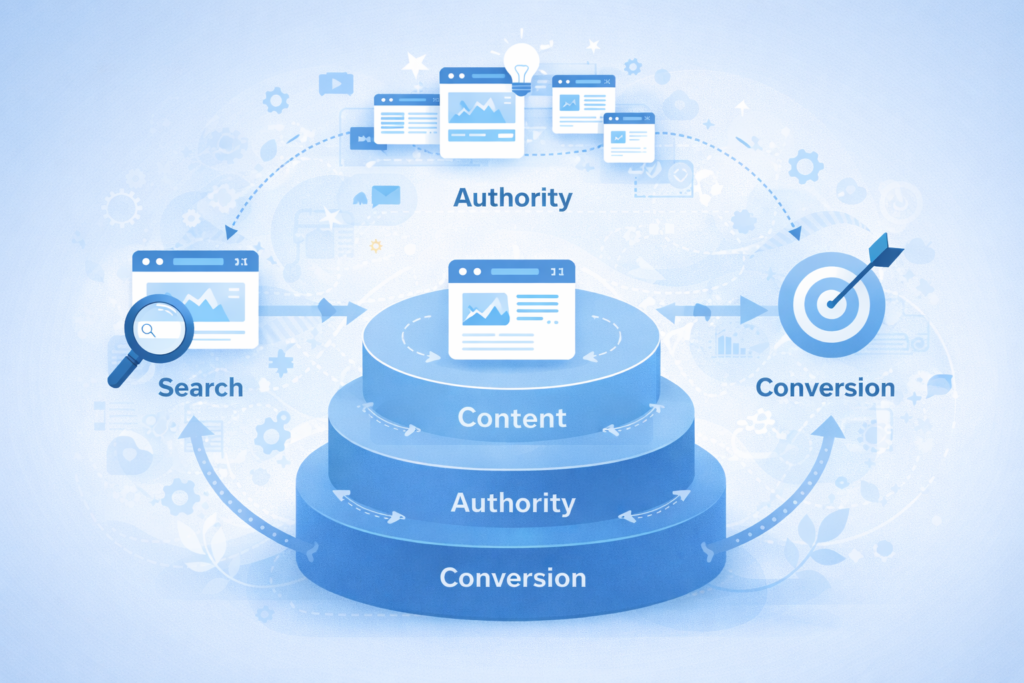
Visitors first discover the brand through search engines, social platforms, or marketing campaigns.
They then encounter content designed to educate or introduce a problem.
After engagement begins, the funnel should gradually reinforce expertise, credibility, and value.
Only after these stages should the visitor encounter the decision environment.
When this sequence becomes inconsistent, leaks appear.
For example, traffic may arrive through educational content, yet the funnel immediately pushes a purchase without strengthening trust.
In other cases, authority may be demonstrated clearly in blog content but disappear when the visitor reaches the offer page.
These inconsistencies weaken decision confidence.
Businesses facing this challenge often benefit from applying structured digital problem solving frameworks that analyze how different digital stages interact to produce outcomes.
This perspective shifts the focus away from isolated metrics and toward the system behind the funnel.
Research from McKinsey digital transformation research shows that organizations achieve more stable performance when marketing, content, and conversion environments operate as a coordinated system.
When businesses begin diagnosing funnels through this lens, conversion leaks become easier to identify.
Instead of reacting to fluctuating results, teams can observe where trust weakens, where expectations shift, and where visitors hesitate.
Once these structural breakpoints are visible, strengthening the funnel becomes far more predictable.
Building a Funnel That Converts Consistently
Once funnel leaks become visible, the next step is strengthening the system guiding visitors toward a decision.
Many businesses attempt to fix funnel problems by adjusting isolated elements such as page design, button placement, or pricing structure.
While these changes may influence performance slightly, they rarely solve the deeper structural issue.
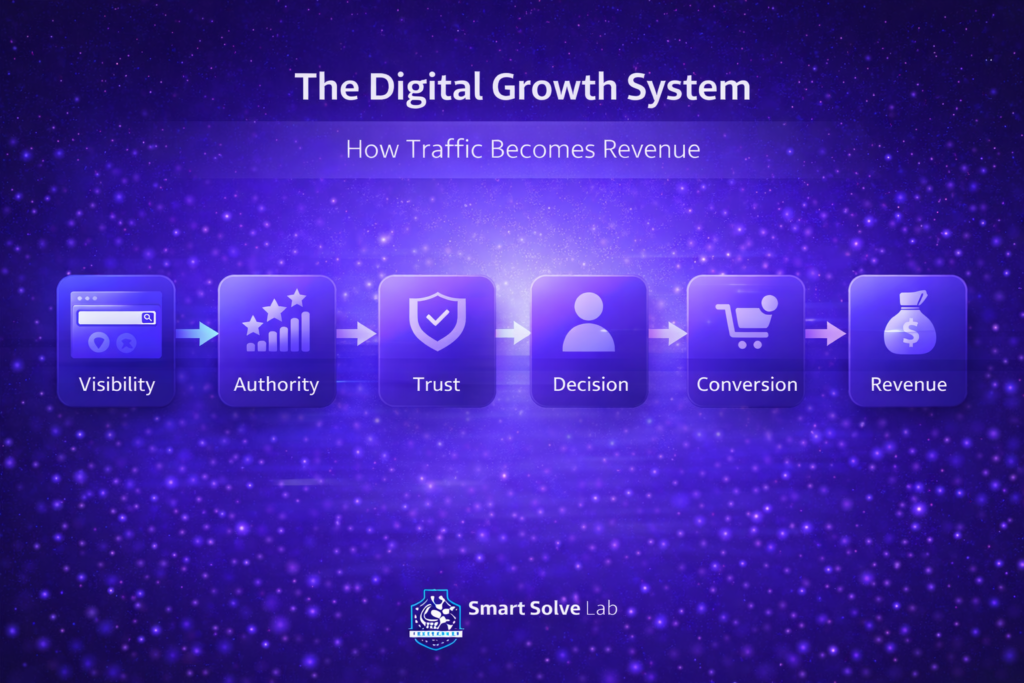
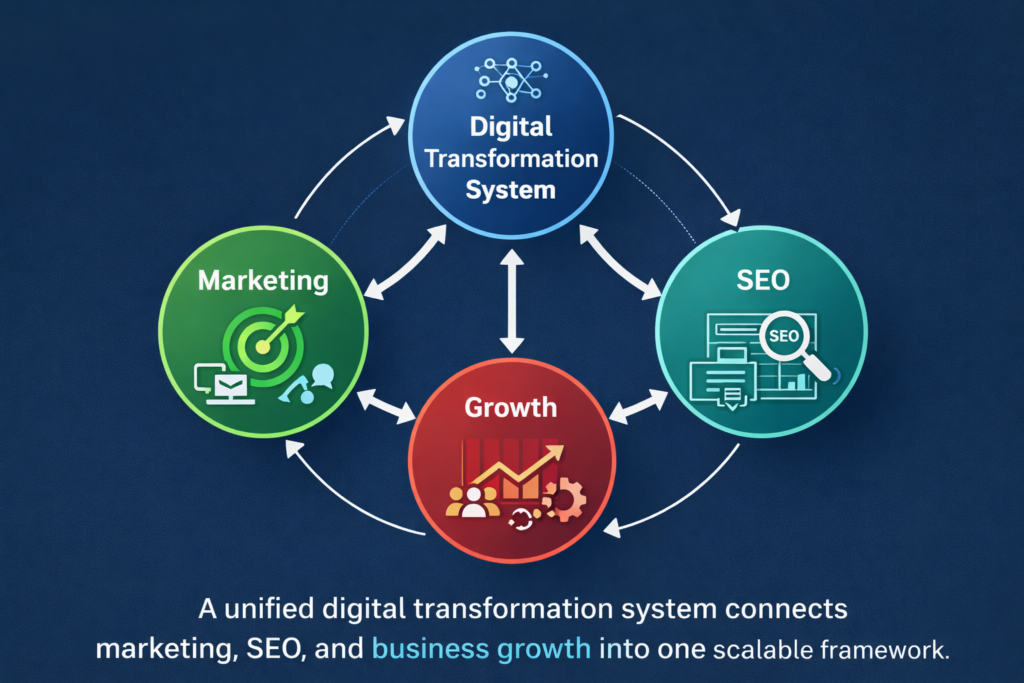
Consistent conversions emerge when the funnel operates as a connected system rather than a collection of independent pages.
Each stage of the funnel should reinforce the next stage in the visitor’s journey.
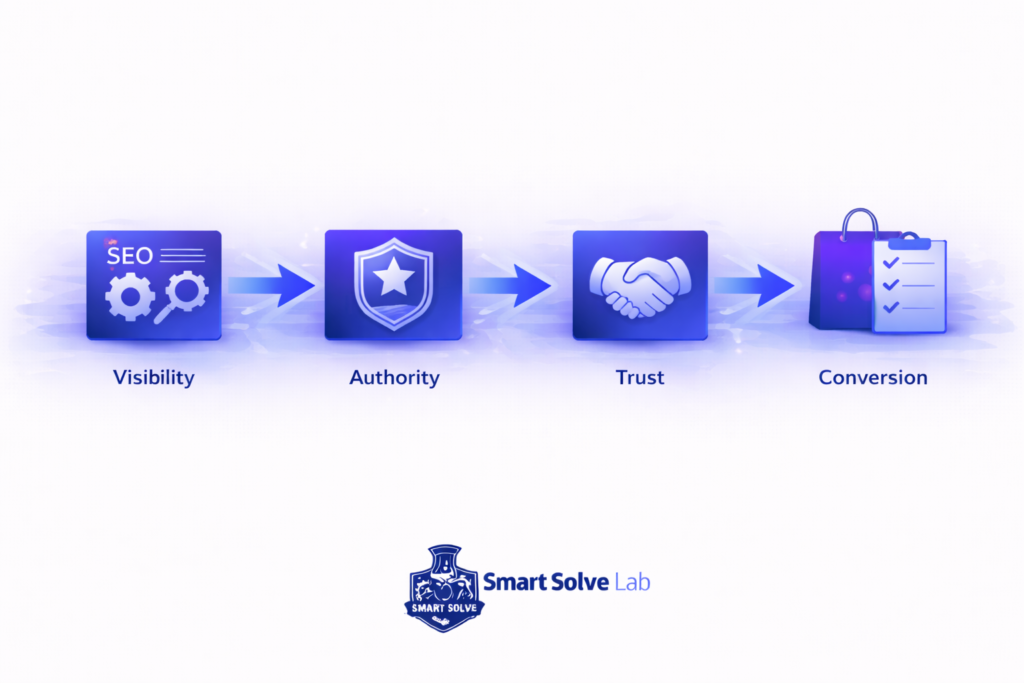
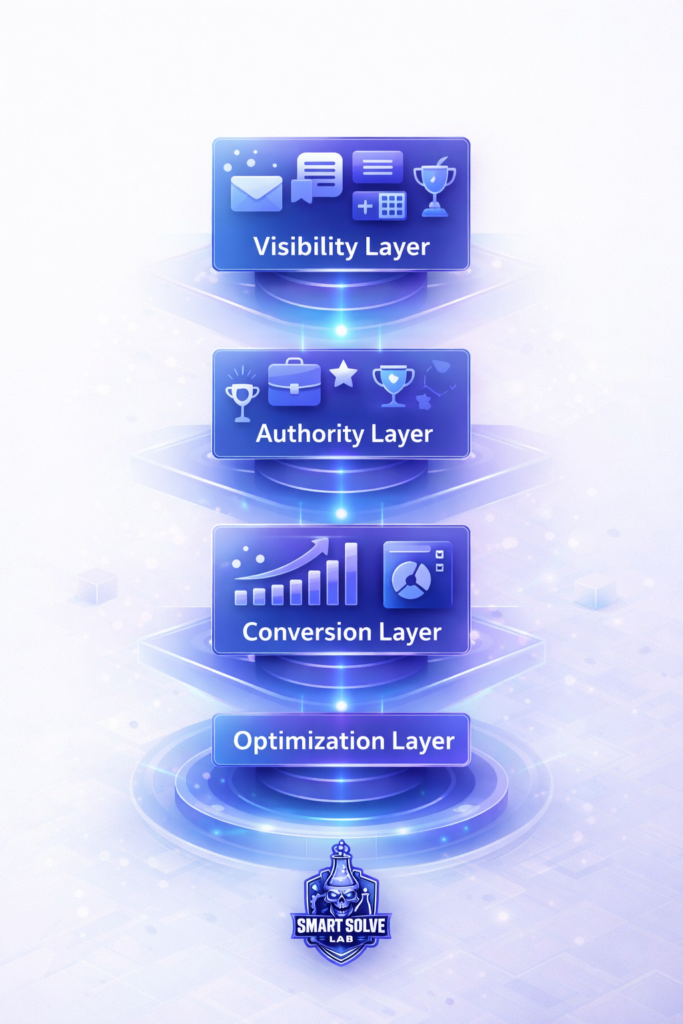
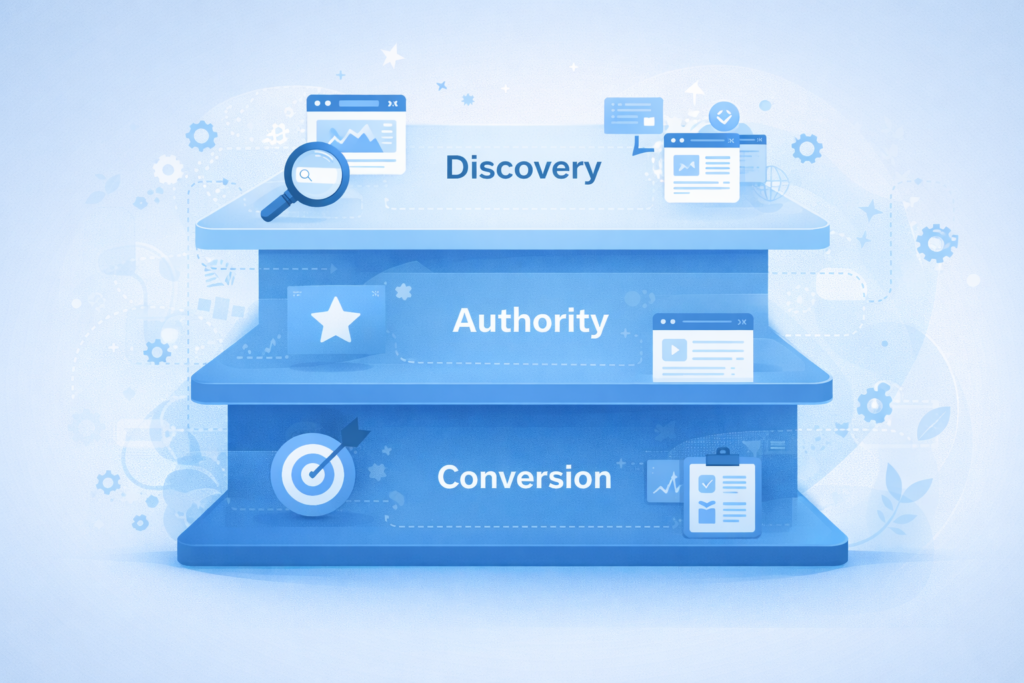
The discovery stage introduces the problem and attracts attention.
The engagement stage builds authority by explaining insights and demonstrating expertise.
The trust stage reinforces credibility through consistent messaging, clarity, and confidence signals.
The decision stage then presents the offer as a natural continuation of everything the visitor has already experienced.
When these stages operate in alignment, visitors move through the funnel without hesitation.
Confidence builds gradually, and the final decision feels logical rather than forced.
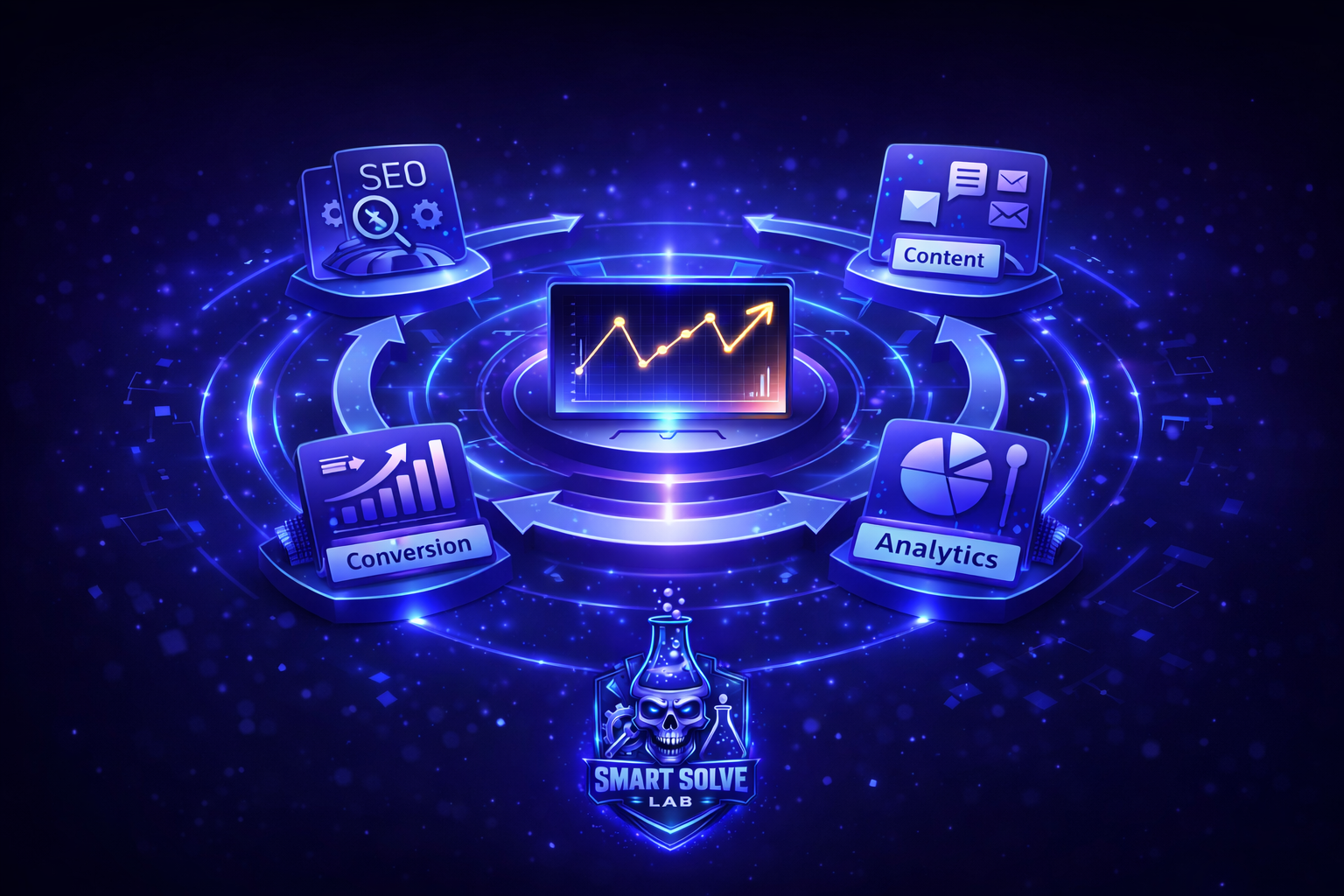
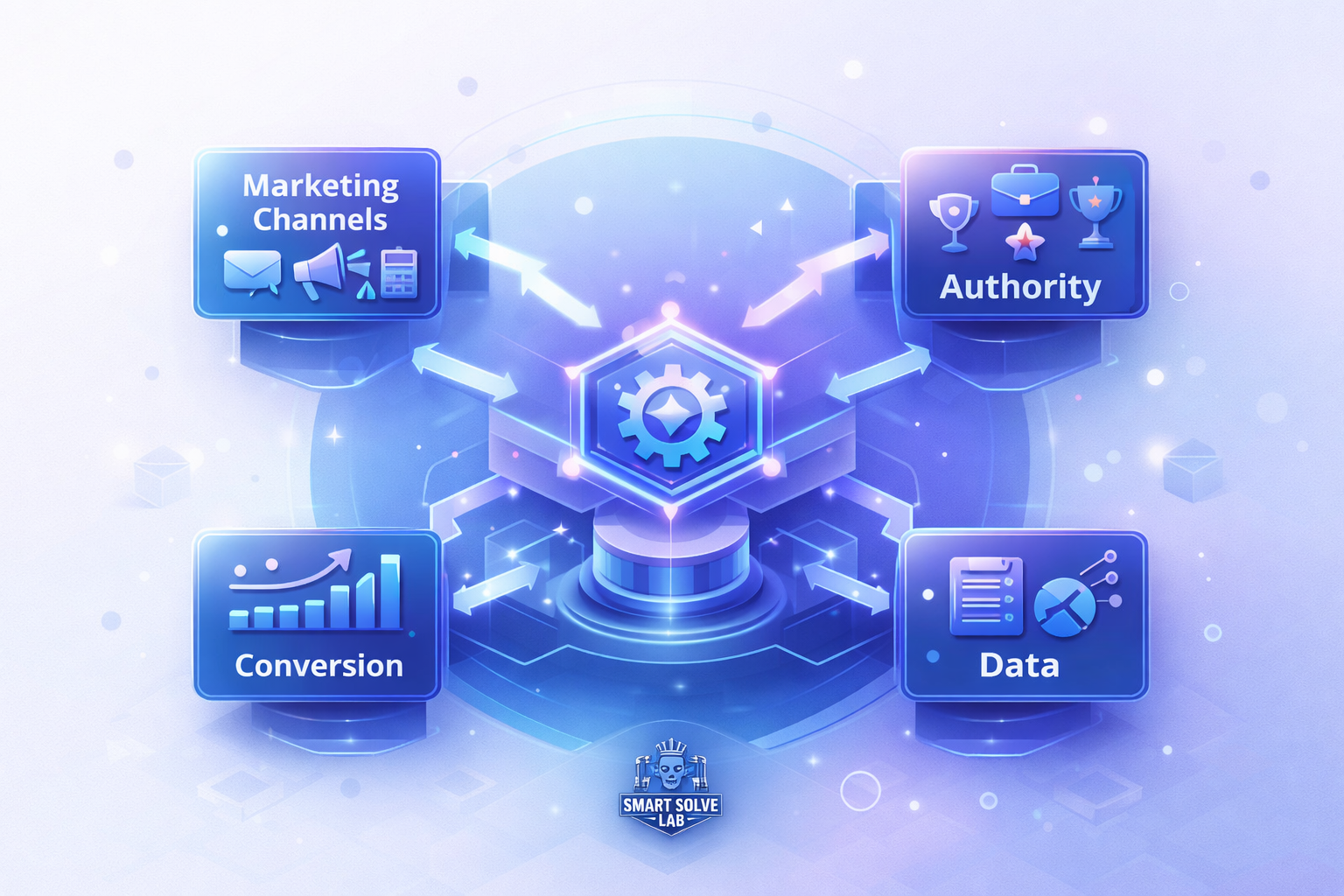
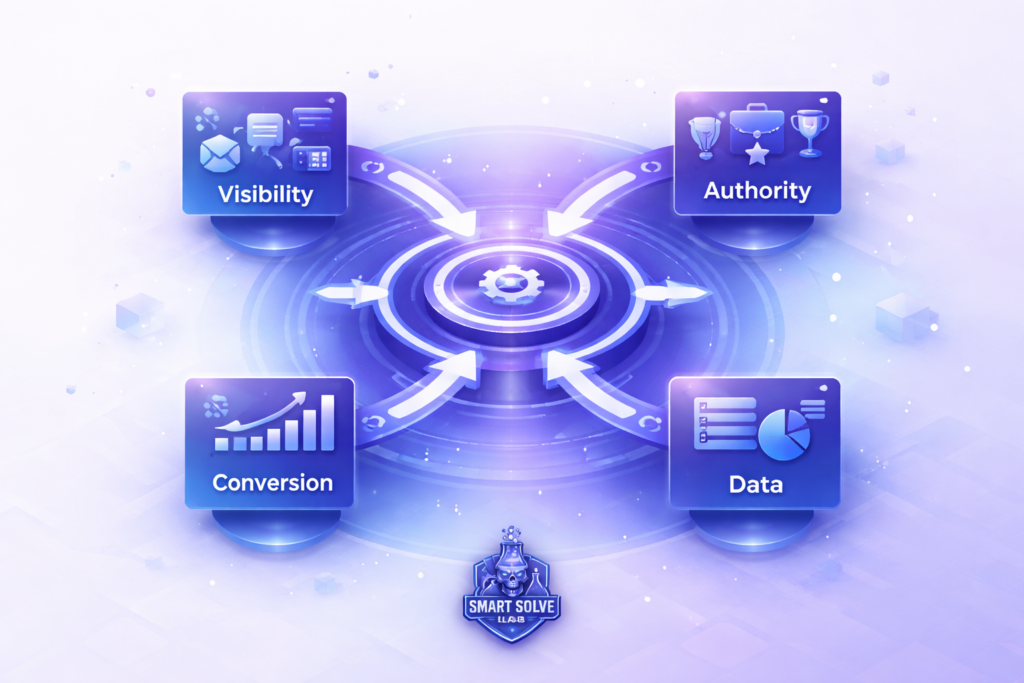
Organizations that achieve stable funnel performance often design their funnels within a structured digital growth system that connects visibility, authority, trust, and conversion into a single pathway.
Instead of treating marketing, content, and sales pages as separate activities, this approach aligns them around the visitor’s decision journey.
Research from Content Marketing Institute conversion research shows that businesses achieve higher conversion stability when educational content, trust signals, and offers remain consistent throughout the buyer journey.
This alignment reduces friction.
Visitors clearly understand the problem being solved, the expertise behind the solution, and the value of taking action.
When funnels operate within this coordinated structure, traffic no longer disappears inside the system.
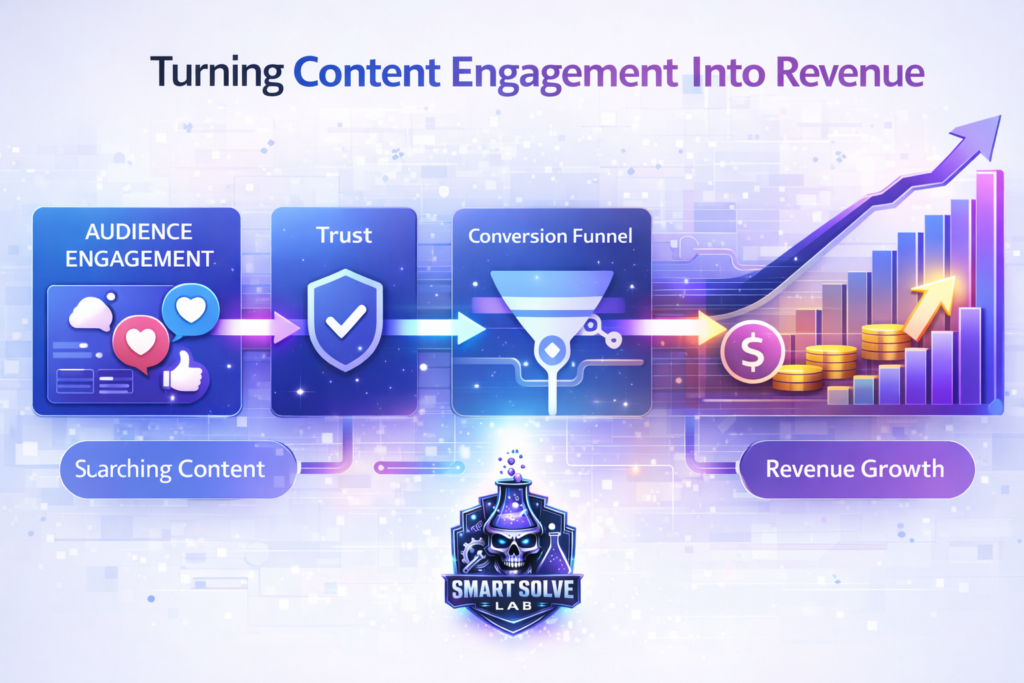
Instead, attention gradually transforms into trust, trust transforms into confidence, and confidence leads naturally toward conversion.
Why Funnel Leaks Are a System Problem, Not a Page Problem
When funnels fail to convert, most businesses immediately focus on fixing individual pages.
They redesign landing pages, adjust headlines, change pricing structures, or experiment with new call-to-action buttons.
While these changes may influence performance temporarily, they rarely solve the underlying problem.
Funnels rarely fail because of a single weak page.
They fail because the system guiding the visitor from discovery to decision lacks alignment.
A visitor’s journey does not begin on the sales page.
It begins the moment they first encounter the brand — through search results, social content, advertisements, or educational articles.
From that point forward, every interaction contributes to the visitor’s perception of credibility, expertise, and value.
When these signals remain consistent, the funnel strengthens trust.
When they become fragmented, hesitation begins to appear.
This is why many organizations experience situations where traffic flows through the funnel but conversions remain unstable.
The system attracting attention is stronger than the system converting that attention into confident decisions.
Businesses attempting to stabilize funnel performance must therefore shift their focus from page optimization to system alignment.
A structured approach to digital problem solving allows organizations to analyze how visibility, authority, trust, and conversion interact inside the digital environment.
Instead of asking “Which page is failing?”, a more useful question becomes:
Where does the visitor’s confidence weaken during the journey?
Research from Search Engine Journal conversion optimization research highlights that conversion improvements often occur when businesses examine the entire customer journey rather than optimizing isolated funnel pages.
This broader perspective reveals why funnel leaks occur and how structural alignment restores stability.
Once the system guiding the visitor journey becomes coherent, funnels begin performing more predictably.
Traffic no longer disappears silently inside the funnel.
Instead, attention transforms into understanding, understanding strengthens trust, and trust naturally leads toward action.
Conclusion
When a sales funnel fails to convert, the instinct is often to fix individual pages.
Businesses redesign landing pages, adjust pricing, experiment with calls to action, or increase advertising budgets in the hope that conversions will improve.
Sometimes these adjustments create short-term improvements.
But when funnel leaks persist, the issue is rarely a single page.
It is the system guiding the visitor journey.
Funnels succeed when each stage strengthens the next stage.
Discovery builds curiosity. Educational content builds authority. Consistent messaging reinforces trust. The decision environment then transforms that trust into confident action.
When this sequence breaks, visitors hesitate.
And hesitation causes potential customers to quietly leave the funnel.
Understanding this dynamic allows businesses to move beyond surface optimization and begin examining the deeper structure behind funnel performance.
Organizations that apply structured digital problem solving approaches are better able to identify where confidence weakens and why visitors abandon the decision pathway.
Instead of reacting to fluctuating results, they strengthen the system guiding attention toward revenue.
Research from HubSpot conversion optimization research shows that businesses achieve more stable conversions when the entire customer journey is aligned rather than optimized in isolated stages.
Once funnel alignment improves, traffic no longer disappears inside the system.
Visitors understand the value of the offer, trust the expertise behind it, and feel confident enough to act.
At that point, the funnel stops leaking customers and begins functioning as it was originally intended — a pathway that converts attention into predictable business growth.
Recommended Reading
If you want to understand how digital growth systems influence traffic, authority, and conversion stability, the following resources provide deeper insights.
frequently Answers questions
Why does my sales funnel get traffic but not conversions?
Many sales funnels receive traffic but fail to convert because the visitor journey is structurally misaligned. Visitors may become interested in the topic but do not develop enough trust or decision clarity before encountering the offer. When visibility, authority, and trust signals are not aligned inside the funnel, visitors hesitate and leave without completing the purchase.
What are the most common reasons funnels lose customers?
Funnels typically lose customers due to three structural issues: audience intent misalignment, weak trust signals at the decision stage, and unclear value transitions between content and offer. When these elements are inconsistent, visitors may engage with the content but feel uncertain about taking the final action.
How can businesses identify where their funnel is leaking customers?
Businesses can diagnose funnel leaks by mapping the entire visitor journey from discovery to conversion. This process reveals where visitors hesitate, where trust weakens, and where decision clarity becomes unclear. Analyzing the system behind the funnel rather than focusing on individual pages helps identify structural conversion gaps.
Does increasing traffic automatically improve funnel conversions?
Increasing traffic does not automatically improve conversions. Traffic represents attention, but conversions occur only when the funnel provides a clear pathway from curiosity to trust and finally to confident decision making. Without structural alignment inside the funnel, higher traffic can simply increase the number of visitors who leave without converting.
How can businesses build a funnel that converts consistently?
Businesses build consistent funnels by aligning discovery channels, authority content, trust signals, and decision environments into a unified system. When visitors experience consistent messaging and clear value throughout the journey, confidence grows naturally and conversion rates stabilize.