Many websites wonder why good content gets no traffic even after publishing helpful articles and guides.
The problem is rarely content quality. In most cases, the real issue is a broken content visibility system that prevents search engines from discovering and ranking your pages.
Blog posts are published regularly. Ideas are researched carefully. Information is valuable for readers.
Despite this effort, search traffic remains low.
Pages struggle to appear in search results, and the audience that could benefit from the content rarely discovers it.
This situation is common across many websites.
Good content alone does not automatically create visibility.
Search engines evaluate far more than the quality of a single article. They examine topical authority, internal relationships between pages, and the structural signals that help determine whether a website represents genuine expertise.
Without these signals, even well-written content may remain invisible.
Understanding why good content gets no traffic requires looking beyond writing quality and examining the visibility system responsible for connecting content with audiences.
When this system is weak, valuable information can remain hidden despite consistent publishing.
The solution therefore lies not only in creating good content but in building the discovery framework that allows that content to be found.
Table of Contents
Why Good Content Still Gets No Traffic (And the Visibility System That Fixes It)
Understanding Why Good Content Gets No Traffic
Many businesses invest significant time creating content.
They publish blog posts consistently, share insights on social media, and try to provide helpful information to their audience. From the outside, everything appears to be moving in the right direction.
Content is being created. Effort is being invested. The strategy looks active.
Yet one frustrating result continues to appear.
Traffic remains low.
Articles receive only a handful of visitors. Pages fail to appear in search results. Weeks or months pass, but meaningful discovery never happens.
This situation confuses many organizations because they believe good content should naturally attract attention.
If the content is helpful, informative, and relevant, visitors should eventually find it.
However, digital visibility rarely works this way.
Quality content alone does not guarantee discovery.
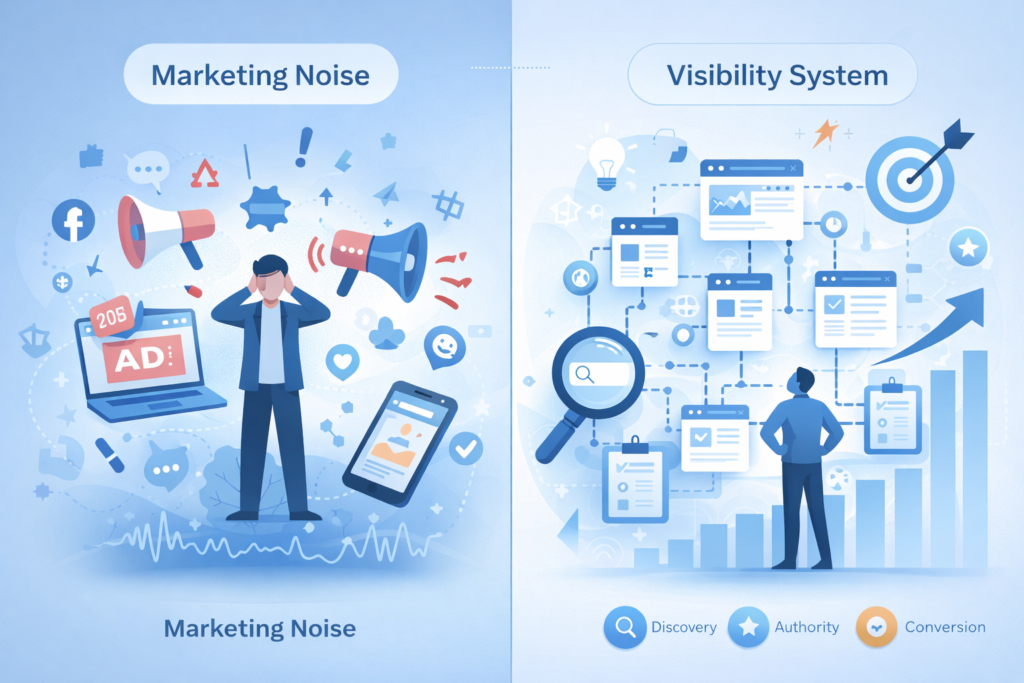
Visibility emerges from a structured system that connects content creation, search relevance, authority signals, and distribution pathways.
Without that system, even valuable content can remain invisible.
This creates what can be described as a visibility paradox.
Businesses produce useful material, yet the audience never sees it.
From the inside, effort increases.
From the outside, visibility remains limited.
Understanding this paradox requires shifting perspective away from content quality alone and examining the structure behind digital discovery.
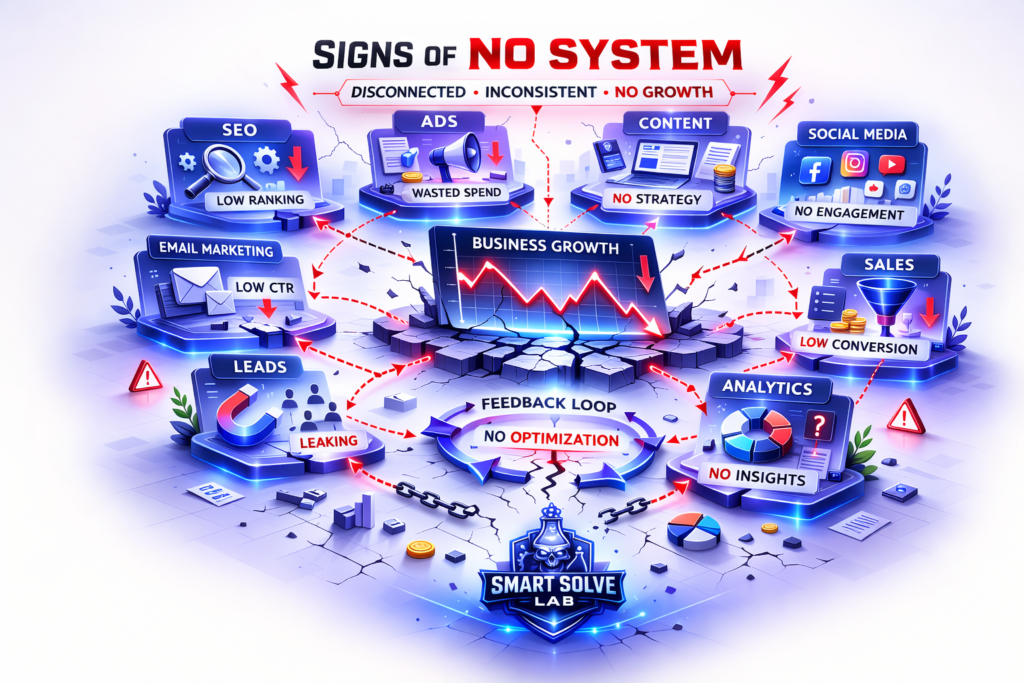
Many organizations approach online growth through isolated actions rather than through a coordinated digital growth system.
Content is created, but the system responsible for visibility is weak.
When this happens, search engines struggle to interpret the importance of the content, distribution channels fail to amplify it, and potential readers never encounter it.
Research from Search Engine Journal SEO research shows that strong content alone rarely ranks without supporting signals such as topical authority, internal linking, and structured visibility strategies.
This means the problem is often not the content itself.
The problem is the absence of a structured visibility system capable of bringing that content in front of the right audience.
To understand why good content frequently remains invisible, it is necessary to examine how digital visibility actually works inside a functioning growth system.
Why Good Content Often Remains Invisible
Many businesses assume that producing helpful content should naturally attract traffic.
The logic appears simple. If an article provides useful insights, answers important questions, or explains complex topics clearly, readers should eventually discover it through search engines or online sharing.
However, digital visibility rarely depends on content quality alone.
Search engines evaluate content within a broader ecosystem of signals that determine whether a page deserves attention. These signals include topical authority, internal linking relationships, content structure, and relevance within a larger digital visibility system.
When these signals are weak or disconnected, search engines struggle to understand where the content fits within the broader knowledge landscape of the web.
As a result, even valuable articles may remain buried beneath competing pages that provide stronger authority signals.
Research from HubSpot content marketing research indicates that successful content strategies rely not only on high-quality articles but also on structured visibility frameworks that help search engines interpret relevance and authority.
Understanding why good content often remains invisible therefore requires examining the structural conditions that influence discovery.
Content creation is only one component of visibility.
Without a system guiding how content connects to authority signals, search engines may interpret the material as isolated information rather than as part of a coherent expertise framework.
The Difference Between Content Quality and Content Visibility
Content quality refers to the usefulness, clarity, and depth of information presented to readers.
Visibility, however, refers to whether that content is discoverable within search engines and digital distribution channels.
These two factors operate differently.
An article may be insightful and well written, yet remain undiscovered if the signals that help search engines evaluate authority are missing.
Many organizations mistakenly assume that producing more content will eventually solve the problem.
However, when the structural elements supporting discovery remain weak, additional content simply expands an invisible library rather than increasing visibility.
This is why businesses often publish dozens of articles without seeing meaningful growth in search traffic.
The missing element is not effort.
The missing element is the structured system that connects content to discovery pathways.
The Digital Visibility System Behind Content Discovery
Content becomes discoverable only when it operates inside a structured visibility framework.
Search engines do not evaluate pages in isolation. Instead, they examine how content connects to related topics, authority signals, and internal relationships across a website.
When a website publishes content without a coordinated structure, each article behaves like a standalone page competing for attention.
This makes it difficult for search engines to determine whether the site represents genuine expertise within a specific domain.
However, when content operates within a connected digital growth system, discovery signals become clearer.
Search engines can interpret topical relationships between articles, identify expertise patterns, and understand how different pieces of information contribute to a broader knowledge framework.
This structured relationship between pages is what allows websites to gradually build authority in a specific subject area.
Research from Search Engine Journal SEO research shows that websites demonstrating strong topical authority across related articles are significantly more likely to achieve consistent search visibility than sites publishing isolated pieces of content.
In other words, visibility is rarely the result of a single article.
It is the result of a coordinated system that strengthens discovery signals across an entire website.
How Search Engines Interpret Authority
Search engines analyze several factors when determining whether content deserves visibility.
One important factor is topical relevance. When multiple articles explore related problems within the same subject area, search engines interpret the site as a source of expertise.
Another factor is internal connectivity. When articles reference and reinforce one another, search engines gain clearer signals about how information on the site is organized.
A third factor involves consistency of subject focus. Websites that repeatedly address a specific domain tend to build stronger authority signals than those publishing unrelated topics.
When these elements operate together, content becomes easier for search engines to categorize and recommend to users searching for relevant solutions.
Without these signals, even well-written articles may struggle to appear in search results because the surrounding structure does not clearly communicate authority.
The Structural Reasons Good Content Fails to Gain Visibility
When businesses examine why their content fails to attract traffic, they often focus on surface explanations.
They assume the article might need better headlines, stronger keywords, or more promotion.
While these factors can influence performance, they rarely explain why entire websites remain invisible despite consistent publishing.
The deeper causes usually exist within the structural environment surrounding the content itself.
Visibility problems rarely originate from a single mistake. Instead, they appear when the discovery pathways that connect content to audiences remain weak or incomplete.
Understanding these structural breakpoints helps businesses identify why valuable content fails to generate meaningful discovery.
Breakpoint 1 — Weak Topic Authority
Search engines favor websites that demonstrate consistent expertise within a specific subject area.
When content is scattered across unrelated topics, authority signals weaken because search engines cannot clearly identify the site’s primary expertise.
This often happens when businesses publish articles without aligning them around a focused knowledge structure.
Instead of reinforcing authority, each article competes independently for attention.
Over time, this creates a fragmented content environment where even useful material struggles to gain traction.
Organizations attempting to solve complex visibility challenges often benefit from applying structured digital problem solving frameworks that clarify how different content assets should reinforce one another.
Breakpoint 2 — Lack of Internal Connectivity
Content visibility also depends on how pages connect within the website itself.
Internal links help search engines understand relationships between topics and distribute authority across the site.
When articles remain isolated, search engines receive limited signals about how the information fits into a larger expertise structure.
As a result, valuable pages may remain undiscovered because the surrounding architecture does not reinforce their importance.
Strong internal connectivity transforms individual articles into parts of a coherent knowledge network.
This network helps search engines interpret relevance more accurately.
Breakpoint 3 — Absence of Discovery Signals
Even high-quality content requires signals that guide search engines toward understanding its value.
These signals include structured headings, consistent topic coverage, and connections to authoritative references.
Research from Content Marketing Institute research suggests that organizations achieving consistent organic visibility tend to combine content quality with clear discovery frameworks that signal expertise and relevance.
Without these signals, search engines may interpret the content as informative but not authoritative.
This subtle distinction often determines whether an article appears prominently in search results or remains buried beneath competing pages.
How Businesses Can Fix Content Visibility Problems
Once businesses understand why good content remains invisible, the next step is correcting the structural conditions responsible for weak discovery.
Many organizations initially attempt to solve visibility problems by increasing publishing frequency.
They produce more blog posts, expand social media activity, or experiment with additional promotion channels.
While these efforts increase activity, they rarely solve the underlying issue.
Visibility does not improve simply because more content exists.
Visibility improves when content operates within a coordinated discovery system.
This system connects topic authority, internal knowledge relationships, and search relevance signals so that each article strengthens the visibility of the others.
Businesses that apply structured digital problem solving approaches often begin identifying how their content ecosystem should be organized to support long-term discovery.
When this structural alignment improves, search engines receive clearer signals about expertise and relevance.
Over time, this clarity increases the likelihood that articles appear in search results for relevant problems.
Research from Harvard Business Review digital strategy research highlights that organizations achieving sustainable digital growth typically organize their knowledge assets around clear problem-solution systems rather than publishing isolated content.
In practical terms, this means shifting focus from producing individual articles to building an interconnected knowledge framework.
Building a Visibility-Focused Content Structure
A visibility-focused structure begins by defining the core problems a website intends to solve for its audience.
Each content asset then supports that mission by exploring related questions, frameworks, and explanations connected to the same subject area.
When articles reinforce one another through internal relationships, search engines interpret the website as a specialized source of expertise.
This gradually strengthens topical authority.
Instead of competing independently for visibility, the content begins working together as a system.
Over time, this coordinated structure increases the probability that search engines recommend the site’s material to users searching for solutions within that topic.
The Visibility System Most Businesses Are Missing
Many organizations believe their visibility problem can be solved simply by improving individual articles.
They adjust keywords, rewrite headlines, or publish additional content in the hope that search engines will eventually recognize the value of their material.
While these actions can help in certain situations, they rarely solve the deeper structural problem behind digital invisibility.
The real issue is that most businesses approach content creation as isolated activity rather than as part of a coordinated system.
Articles are written independently, topics are selected randomly, and connections between ideas remain weak.
As a result, the website fails to communicate a clear signal of expertise to search engines.
Visibility improves only when content operates within a structured system that connects discovery, authority, and relevance.
This is why many organizations begin seeing growth only after implementing a consistent digital visibility system that aligns their content with specific problem domains.
When content consistently explores related problems, frameworks, and insights, search engines gradually recognize the website as a trusted source within that knowledge space.
Research from Search Engine Journal SEO research indicates that websites demonstrating strong topical authority across interconnected articles often achieve more stable search rankings than those publishing unrelated content.
The difference is not simply the amount of content produced.
The difference is the structure connecting that content.
Visibility Emerges From Systems, Not Individual Articles
A single article rarely generates sustained search visibility.
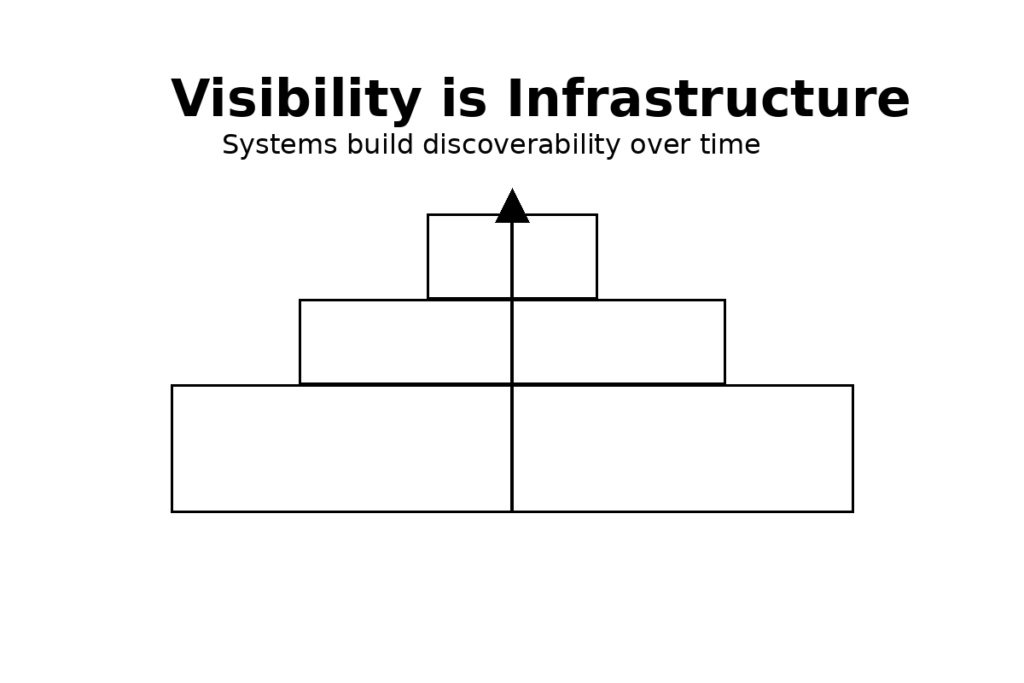
Instead, visibility emerges from a network of related content that collectively signals expertise within a topic.
When articles reinforce one another through internal relationships, search engines gain a clearer understanding of the website’s authority.
This interconnected structure transforms individual posts into components of a larger knowledge ecosystem.
Within such systems, each article strengthens the visibility of the others.
Over time, the combined authority of the network increases the likelihood that search engines recommend the site’s content to users searching for relevant solutions.
Businesses that recognize this principle begin shifting their strategy.
Instead of publishing isolated posts, they design structured visibility systems where content supports discovery, authority, and long-term growth.
Conclusion:Fixing the Hidden Visibility Problem
Many businesses believe their content struggles to gain visibility because the material itself is not strong enough.
They assume the solution is simply to write better articles, publish more frequently, or experiment with different headlines and keywords.
However, the deeper issue is rarely content quality alone.
The real challenge usually lies in the structure surrounding the content.
Good content can remain invisible when the discovery system responsible for connecting that content to audiences is weak.
Search engines evaluate websites as ecosystems rather than as isolated pages. They look for patterns of expertise, internal relationships between topics, and signals that indicate a coherent knowledge framework.
Without these signals, even valuable content may fail to attract meaningful traffic.
When businesses begin organizing their articles within a structured digital growth system, visibility patterns gradually change.
Instead of competing independently for attention, each piece of content begins reinforcing the authority of the others.
Research from McKinsey digital strategy research suggests that organizations achieving consistent digital growth typically align their knowledge assets within coordinated systems rather than relying on isolated marketing activities.
This principle applies directly to content visibility.
Discovery improves when content operates within a system designed to signal expertise, relevance, and authority.
Businesses that shift from random publishing toward structured visibility frameworks often experience the most sustainable improvements in search traffic.
Over time, the combination of strong content and a coordinated discovery system allows valuable insights to reach the audience they were created to serve
Frequently Answer Questions
What is a digital visibility system?
A digital visibility system is a structured framework that helps content become discoverable across search engines and digital platforms.Instead of publishing isolated articles, a visibility system organizes content around related topics, internal connections, and authority signals.When this structure exists, search engines can clearly understand the expertise of the website and recommend its content to users searching for relevant solutions.
Why does good content sometimes receive no traffic?
Good content may receive little traffic when the surrounding discovery signals are weak.Search engines rely on multiple indicators such as topical authority, internal linking, and structured content relationships.If these signals are missing, search engines may struggle to understand the importance of the article even if the information itself is valuable.
How can businesses improve content visibility?
Businesses can improve content visibility by organizing their articles into connected topic clusters and strengthening the internal relationships between related ideas.This approach helps search engines interpret the website as an authority within a specific subject area rather than as a collection of unrelated posts.Over time, this structured approach increases the likelihood that search engines recommend the site’s content to relevant audiences.
Does publishing more content automatically increase traffic?
Publishing more content does not automatically increase traffic if the articles are not connected within a clear discovery framework.Additional content may expand the knowledge available on the site, but without structured internal relationships and topical focus, search engines may still struggle to identify authority signals.Traffic growth usually occurs when content operates within a coordinated system rather than through isolated publishing efforts.
Why is topical authority important for search visibility?
Topical authority helps search engines recognize a website as a trusted source of expertise within a specific subject area.When multiple articles consistently explore related problems and frameworks, search engines gain stronger signals that the site provides comprehensive knowledge on that topic.This authority increases the probability that the website’s content appears in search results for users seeking solutions in that domain.
Why does good content sometimes get no traffic?
Good content may receive no traffic when search engines cannot easily discover it. This usually happens due to weak topic authority, poor internal linking, or missing visibility signals that help search engines understand the relevance and importance of the content