• Digital problem solving :Why Businesses Struggle to Solve Digital Problems Systematically

    Digital problem solving :Why Businesses Struggle to Solve Digital Problems Systematically

    Digital problem solving

    Helps businesses encounter problems continuously. Traffic fluctuates, conversions decline, visibility weakens, campaigns underperform, and growth slows unexpectedly. In response, organizations often act quickly. New tactics are introduced, tools are adopted, content increases, and strategies are adjusted. Activity accelerates whenever performance drops.

    Despite this constant effort, many businesses experience a recurring pattern: problems temporarily improve, then return in different forms. Visibility recovers but conversions remain unstable. Campaigns generate leads but growth stalls. Engagement rises yet authority does not strengthen. The cycle repeats, creating ongoing correction rather than sustained progress.

    This instability rarely results from lack of skill or commitment. Teams are capable and motivated. The deeper issue is structural. Most organizations attempt to solve digital problems without a coherent system. Actions occur, but they are not coordinated within the architecture that produces outcomes. As a result, improvements remain isolated and fragile.

    Understanding why digital problems persist requires examining how businesses approach problem solving itself. The challenge is not the presence of problems, but the absence of systematic resolution.


    The Nature of Digital Problems

    Digital performance emerges from interconnected factors rather than single causes.Digital visibility depends on positioning and authority. Authority develops through consistent expertise signals. Conversion relies on trust and clarity. Growth reflects alignment across channels, messaging, and execution processes. Each outcome results from multiple layers interacting.

    When businesses interpret problems as isolated events, they misread this complexity. A drop in traffic is treated purely as an SEO issue. Weak conversions are seen as design failure. Low engagement is attributed to content frequency. These interpretations focus on visible symptoms rather than structural relationships.

    Because digital systems are layered, issues propagate across components. A positioning gap can reduce authority perception, weaken relevance, and ultimately lower visibility. Similarly, inconsistent messaging can disrupt trust, reducing both conversion and retention. The original cause may be distant from the observed symptom.

    Without recognizing these connections, organizations address surface indicators while underlying drivers remain unchanged. Solutions therefore provide partial relief but not stability. The system continues producing the same outcomes under slightly altered conditions.

    Systematic problem solving begins with accepting that digital issues are architectural rather than isolated. Only by viewing performance as a system can causes be accurately understood.


    Why Activity Feels Like Progress

    Modern digital environments reward visible action. Publishing more content, launching campaigns, testing tools, and adjusting channels all create a sense of momentum. Metrics fluctuate, dashboards update, and teams remain engaged. This movement reinforces the belief that progress is occurring.

    However, activity alone does not guarantee improvement. When actions lack structural alignment, they increase complexity rather than coherence. Additional content without clear positioning dilutes authority. New channels without integrated messaging fragment visibility. Multiple tools without unified processes create operational friction.

    The perception of progress emerges because activity produces short-term metric shifts. Traffic spikes from campaigns, engagement rises from promotions, and conversions increase temporarily from incentives. Yet these gains often fade because they do not alter the system generating results.

    Organizations then interpret regression as the need for further activity. More campaigns, more tools, more adjustments. Over time, effort expands while outcomes remain unstable. The underlying architecture remains unchanged despite increasing intervention.

    Systematic resolution requires distinguishing between motion and improvement. Progress occurs when the structure producing outcomes strengthens, not when activity volume rises.


    Fragmentation: The Hidden Barrier
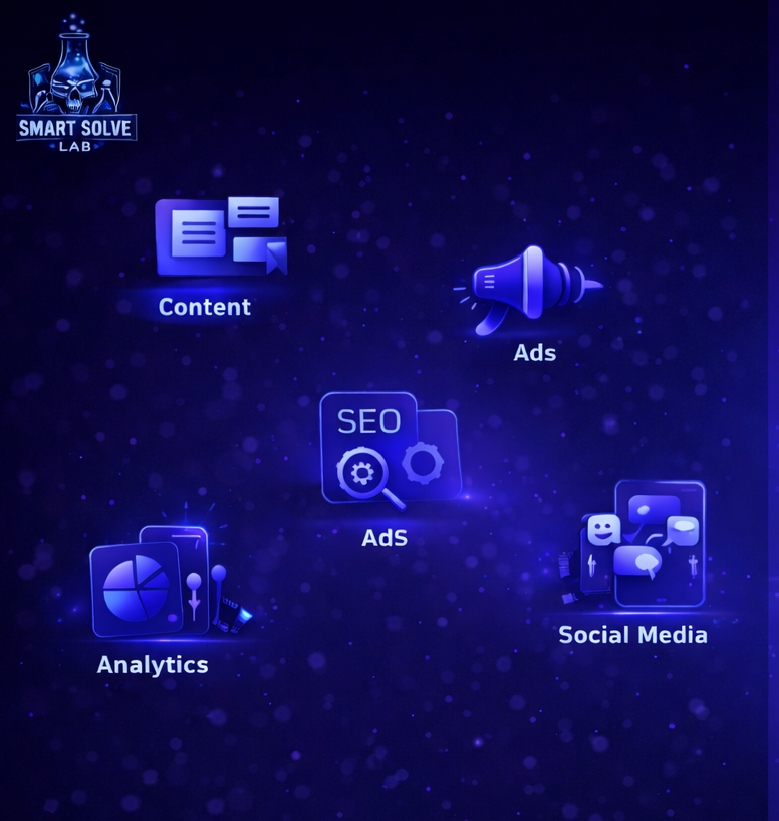
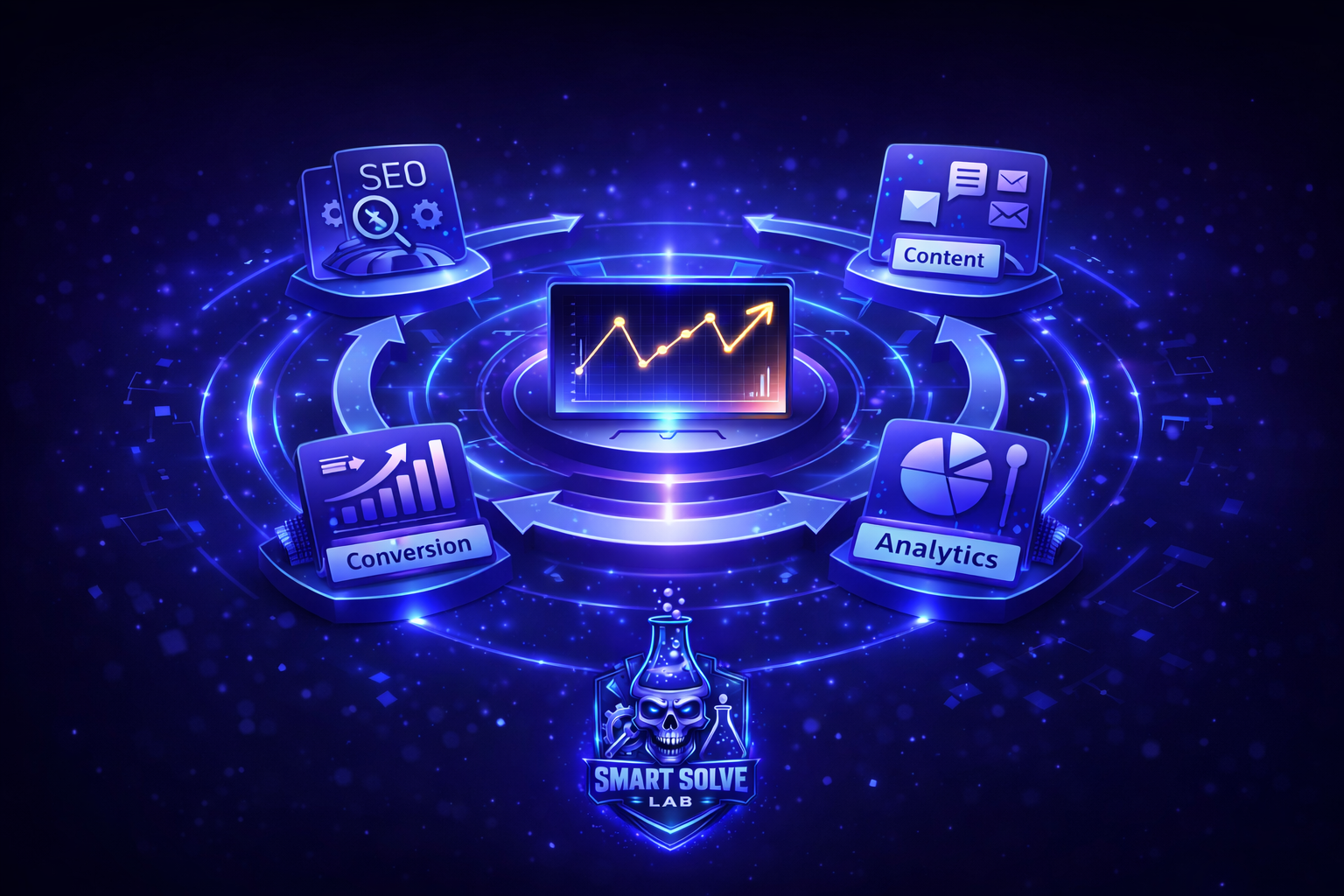
    Fragmented digital marketing activities causing stalled business growth
    Disconnected marketing activities increase effort but stall growth without a system.

    One of the most persistent barriers to effective digital problem solving is fragmentation. Most organizations manage visibility, content, messaging, analytics, and conversion as separate functions. Each area operates independently with its own tools, metrics, and priorities.

    This separation obscures relationships between components. Visibility efforts may not reflect positioning strategy. Content production may not reinforce authority themes. Conversion optimization may not align with messaging consistency. Analytics may measure outputs without revealing structural causes.

    Fragmentation leads to localized fixes. Teams adjust within their domain without addressing cross-layer dependencies. SEO adjustments occur without authority development. Content increases without conversion clarity. Campaigns launch without messaging alignment. Each initiative operates correctly in isolation but fails to reinforce the whole.

    Because digital performance is systemic, fragmented execution cannot stabilize outcomes. Improvements in one layer dissipate when adjacent layers remain misaligned. The organization experiences recurring issues despite competent work in each area.

    Systematic problem solving requires reintegrating these layers. Problems must be understood across the full structure rather than within functional silos.


    The Gap Between Symptoms and Causes

    Businesses typically encounter problems through observable indicators: declining metrics, reduced engagement, or performance drops. These indicators highlight symptoms, not causes. The visible issue represents the system’s output rather than its origin.

    For example, weak lead generation may appear as low conversion rates. Yet the cause could involve unclear positioning, inconsistent authority signals, or misaligned audience targeting. Similarly, declining search visibility may reflect topical dilution rather than technical SEO factors.

    When organizations respond directly to symptoms, they apply corrective actions at the output level. Landing pages are redesigned, campaigns are intensified, or keywords are adjusted. While these actions may influence metrics, they do not address the structural source producing them.

    The gap between symptom and cause explains why digital problems recur. Each intervention modifies surface behavior while the underlying architecture continues generating similar outcomes. Over time, teams cycle through repeated adjustments without lasting change.

    Systematic problem solving closes this gap by tracing indicators back to structural origins. Resolution then targets the system rather than its expression.


    From Isolated Actions to Structural Thinking

    Digital transitioning from reactive fixes to systematic resolution requires a shift in perspective. Organizations must move from viewing digital performance as a collection of tasks toward understanding it as an integrated architecture.

    Structural thinking considers how positioning shapes visibility, how authority supports trust, how messaging drives conversion, and how processes sustain consistency. Each component influences others. Changes must therefore reinforce the system rather than operate independently.

    This perspective alters how problems are interpreted. Instead of asking which tactic failed, organizations ask which structural relationship weakened. Instead of adjusting isolated metrics, they examine alignment across layers. Solutions then strengthen the architecture producing results.

    Structural thinking also stabilizes improvement. When causes are addressed at their source, outcomes persist without repeated intervention. The system itself evolves, producing better performance naturally.

    Systematic problem solving is therefore not merely a method but a mindset. It reframes digital challenges from episodic issues into architectural conditions.


    Building Stability in Digital Performance

    Stable digital growth emerges when systems become coherent. Positioning aligns with content. Content reinforces authority. Authority supports visibility. Messaging clarifies value. Conversion pathways reflect trust. Processes maintain consistency. Each layer strengthens others.

    When this alignment exists, problems decrease in frequency and severity. Performance becomes predictable because it originates from coordinated structure rather than isolated effort. Adjustments refine the system instead of compensating for misalignment.

    Organizations that achieve this stability do not eliminate problems entirely. Instead, they resolve them at their source. Each correction strengthens the architecture, reducing future disruption. Improvement compounds rather than resets.

    Systematic problem solving therefore transforms digital management from continuous repair into structured evolution. Effort produces durable outcomes because it modifies the system generating them.


    Conclusion

    Digital problems persist not because businesses fail to act, but because actions lack structural coherence. Organizations respond to symptoms, increase activity, and adjust tactics, yet underlying systems remain unchanged. As a result, improvement remains temporary and instability continues.

    Systematic problem solving reframes digital challenges as architectural conditions rather than isolated events. By understanding how performance emerges from interconnected layers, organizations can address causes rather than symptoms. Each resolution then strengthens the system producing outcomes.

    When digital architecture becomes coherent, growth stabilizes. Effort compounds rather than resets. Problems transform from recurring disruptions into opportunities for structural refinement. Businesses move from continuous correction toward sustained performance.

    Digital problem solving FAQs

    Why do digital problems keep returning after fixes?

    Digital problems often return after fixes due to underlying issues not being fully addressed, lack of proper maintenance, software conflicts, outdated systems, or user behavior that reintroduces the problem.

    Is more activity the solution to weak performance?

    Not necessarily. Increased activity without structural alignment often adds complexity. Improvement occurs when underlying architecture strengthens.

    Can different teams solve digital issues independently?

    Digital performance layers are interconnected. Isolated adjustments rarely stabilize outcomes. Coordination across visibility, authority, messaging, and conversion is essential.

    What creates stable digital growth?

    Alignment across positioning, authority, visibility, messaging, and conversion processes. Stability emerges from coordinated systems rather than isolated tactics.
  • Digital Problem Solving in 2026: Why Businesses Still Struggle(And the System That Fixes It)

    Digital Problem Solving in 2026: Why Businesses Still Struggle(And the System That Fixes It)

    Digital problem solving has become a critical capability for modern businesses in 2026. Despite investing in tools and strategies, many organizations still struggle because they lack a structured digital problem solving system.

    In 2026, businesses face more tools, more data, and more digital solutions than ever before — yet many still struggle to solve recurring operational and growth challenges. Problems reappear, strategies stall, and teams operate in reactive cycles instead of structured improvement.This pattern reflects a deeper structural gap.

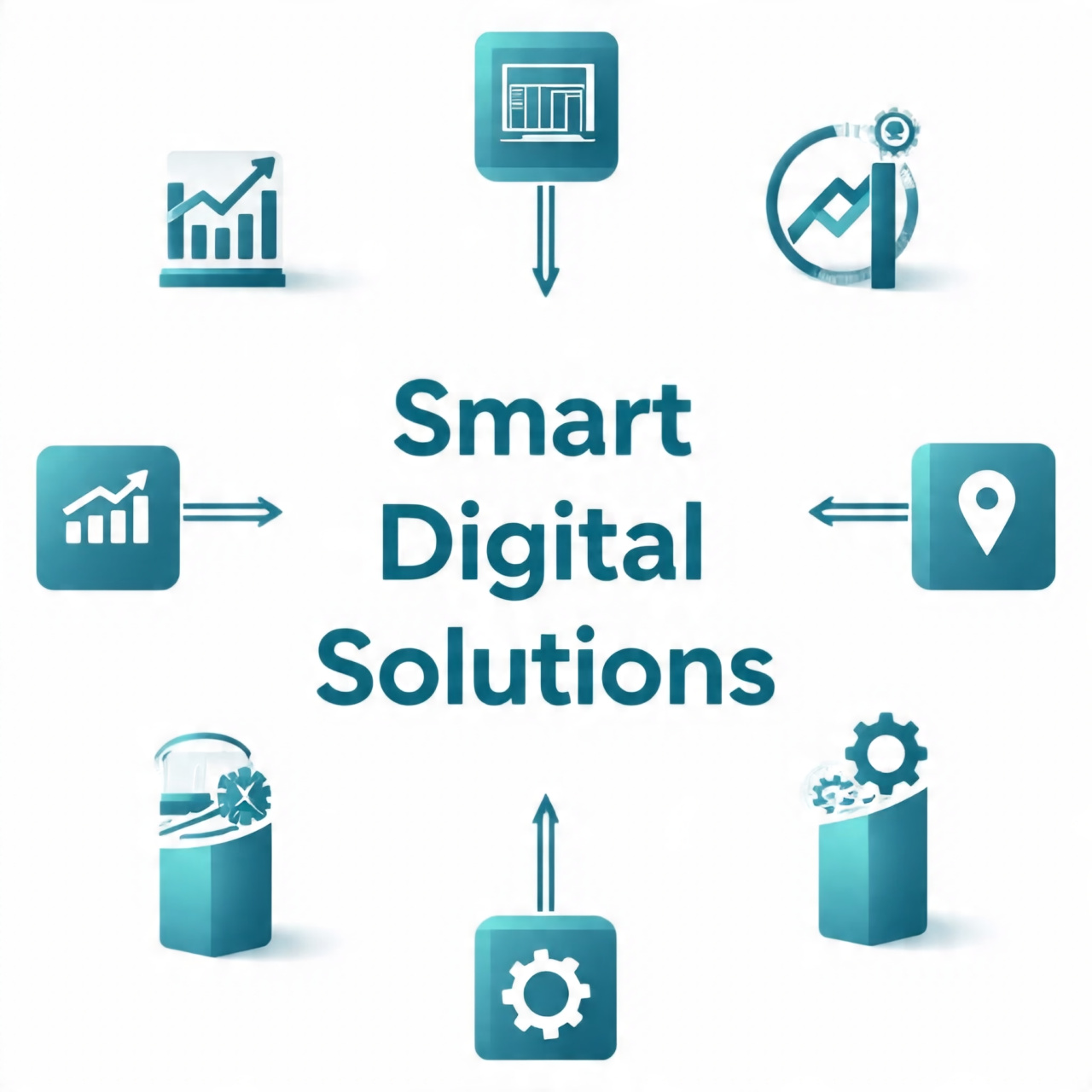
    As explored in Smart Digital Solutions:

    How Businesses Solve Problems Faster in 2026, effective problem solving today depends on integrated digital systems rather than isolated tools or tactics.

    The same insight appears in the Digital Problem Solving Framework for Businesses in 2026, where sustainable results emerge only when diagnosis, strategy, and execution align within a structured approach.

    Understanding why businesses struggle — and how modern organizations fix this gap — reveals the system that transforms problem solving from a reactive activity into a scalable capability.

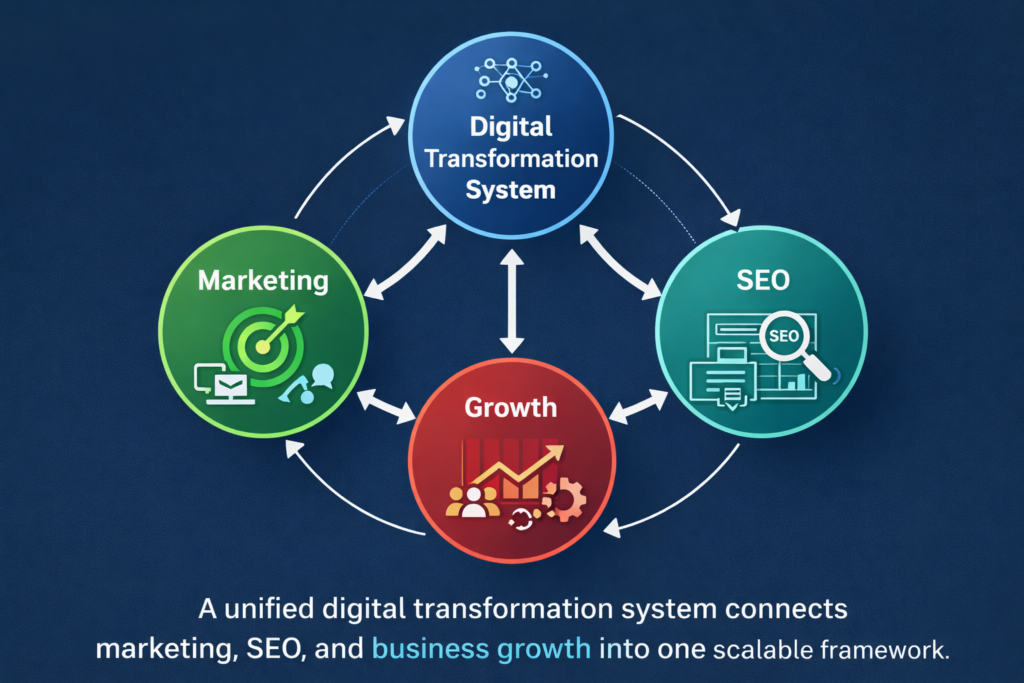
    digital transformation system connecting marketing seo and growth

    Why Modern Businesses Still Struggle to Solve Problems

    Despite rapid digital adoption, many organizations continue to face recurring issues across operations, marketing, and growth.

    Teams implement tools, automate processes, and launch new initiatives, yet core problems persist or evolve rather than disappear.

    The primary reason is fragmentation. Departments often operate with separate data, disconnected workflows, and isolated decision-making processes.

    Problems are addressed locally instead of systemically, which creates temporary fixes rather than durable solutions.

    Another challenge is speed. Modern markets change faster than traditional problem-solving models can respond.

    By the time analysis is complete, conditions have shifted, making earlier solutions partially obsolete.

    As a result, businesses fall into a cycle of continuous reaction instead of structured resolution.

    The Hidden Reason Most Problem-Solving Efforts Fail

    Most business problem-solving initiatives fail not because of poor effort, but because of missing structure. Organizations tend to treat symptoms rather than underlying system causes.

    For example, declining performance may be addressed through marketing changes, staffing adjustments, or new tools.

    However, if the root cause lies in misaligned processes or fragmented data, these actions cannot produce lasting improvement.

    Traditional problem solving often relies on linear analysis: identify → decide → implement. Modern environments require iterative systems: detect → analyze → adapt → optimize.

    Without this structural shift, solutions remain temporary.

    What Effective Business Problem Solving Looks Like in 2026

    In high-performing organizations, problem solving is no longer an occasional activity — it is an embedded capability.

    Teams continuously detect issues through data signals, analyze patterns across systems, and implement coordinated responses.

    This approach aligns with the structured methodology described in the Digital Problem Solving Framework for Businesses in 2026, where diagnosis, prioritization, and execution operate as a connected cycle rather than isolated steps.

    Effective problem solving also integrates digital tools, analytics, and cross-functional collaboration.

    Instead of departments acting independently, solutions emerge from shared visibility and coordinated action.

    The Structured Digital Problem-Solving System

    Modern businesses solve problems through structured digital systems that connect data, workflows, and decision logic. These systems allow organizations to move from reactive fixes to predictable resolution.

    A structured system typically includes:

    • unified data visibility
    • standardized diagnostic methods
    • solution prioritization logic
    • coordinated execution workflows
    • continuous feedback loops

    Together, these elements transform problem solving into an operational capability rather than a situational response.

    The 3 Pillars of Structured Digital Problem Solving

    three pillars of digital transformation strategy marketing seo growth
    Digital transformation succeeds when marketing, SEO, and growth systems align.

    Modern business problem solving is no longer about isolated fixes or quick solutions.

    Sustainable resolution emerges when organizations build a structured system that diagnoses root causes, designs aligned solutions, and continuously improves performance.

    This structured approach rests on three foundational pillars that transform reactive problem solving into a scalable business capability.

    Pillar 1 — Diagnosis Intelligence

    Effective problem solving begins with clarity.

    Many businesses attempt to solve visible symptoms rather than underlying structural issues.

    Diagnosis intelligence ensures that problems are mapped across processes, data flows, customer journeys, and operational systems before solutions are designed.

    Organizations that invest in diagnostic analysis reduce wasted effort, avoid misaligned initiatives, and identify the true leverage points that drive measurable improvement.

    Pillar 2 — Solution Architecture

    Once root causes are understood, solutions must be designed as integrated systems rather than disconnected actions.

    Solution architecture aligns technology, workflows, teams, and decision processes into a cohesive resolution framework.

    This pillar transforms problem solving from ad-hoc interventions into structured implementation, ensuring that fixes address systemic causes rather than temporary effects.

    Pillar 3 — Continuous Optimization

    Business environments evolve continuously, meaning solutions must adapt over time.

    Continuous optimization embeds monitoring, feedback loops, and performance measurement into the problem-solving process.

    Instead of treating resolution as a one-time event, organizations develop an adaptive capability that learns, refines, and improves outcomes with each cycle.

    Why the 3-Pillar Model Matters

    When diagnosis intelligence, solution architecture, and continuous optimization operate together, problem solving shifts from reactive firefighting to proactive capability building.

    Businesses gain faster resolution cycles, lower operational friction, and sustainable performance improvement across functions.

    This structured model forms the foundation of modern digital problem solving in 2026 and beyond.

    How Smart Digital Solutions Accelerate Problem Resolution

    smart digital solutions accelerating business problem resolution
    How smart digital solutions accelerate business problem resolution

    Digital solutions alone do not solve problems — but when embedded in structured systems, they dramatically accelerate resolution speed and accuracy.

    Automation reduces response time. Analytics improves diagnosis precision. Integration eliminates information gaps.

    Collaboration tools synchronize execution across teams.

    As highlighted in Smart Digital Solutions: How Businesses Solve Problems Faster in 2026, organizations that combine digital tools with structured workflows resolve issues faster and prevent recurrence.

    The advantage lies not in technology itself, but in how technology connects processes and decisions.

    Signs Your Business Needs a Structured Problem-Solving System

    Many organizations recognize the need for structured problem solving only after persistent inefficiencies appear.

    Several signals typically indicate systemic gaps:

    • recurring operational issues
    • repeated strategic resets
    • siloed decision-making
    • slow issue resolution
    • inconsistent performance

    These symptoms reflect structural fragmentation rather than isolated failures. Without systemic alignment, problems multiply instead of resolve.

    Building a Continuous Problem-Solving Capability

    continuous optimization loop in smart digital solutions

    The most advanced organizations treat problem solving as a continuous capability embedded within operations.

    Rather than episodic initiatives, they establish ongoing detection, analysis, and improvement cycles.

    This capability emerges when systems connect strategy, processes, data, and execution. Over time, organizations shift from reacting to problems toward preventing them.

    Continuous problem solving does not eliminate challenges — but it ensures they are resolved faster, more accurately, and with lasting impact.

  • Digital Visibility System: 3 Reasons Businesses Stay Invisible (And How to Fix It)

    Digital Visibility System: 3 Reasons Businesses Stay Invisible (And How to Fix It)

    Digital visibility system is the real reason most businesses either get discovered or remain invisible in today’s digital landscape.

    They fail because they remain invisible.

    They publish content. They create offers. They show up online.

    Yet customers never find them.

    In 2026, visibility is no longer about posting more — it is about building a discoverability system.

    And most businesses never build one.

    This is why some brands appear everywhere,while others remain unknown no matter how hard they try.

    This guide explains why businesses stay invisible — and the exact visibility system that changes it.

    digital visibility system showing search authority and discoverability growth
    Digital visibility emerges when discovery, authority, and conversion integrate.

    The Real Reason Most Businesses Stay Invisible

    Most businesses today do not struggle because they lack effort, ideas, or marketing activity. They struggle because they operate without a visibility structure.

    Content is created. Campaigns are launched. Platforms are used. But none of these actions are connected into a discoverability system.

    As a result, businesses remain scattered across channels instead of becoming consistently findable.

    Visibility is not created by doing more marketing. Visibility is created when search presence, content authority, and positioning work together.

    Without this integration, even high-quality brands remain invisible to the people actively searching for them.

    In 2026, the competitive advantage is no longer who creates more content. It is who builds structured visibility.

    Why Marketing Alone Cannot Create Visibility

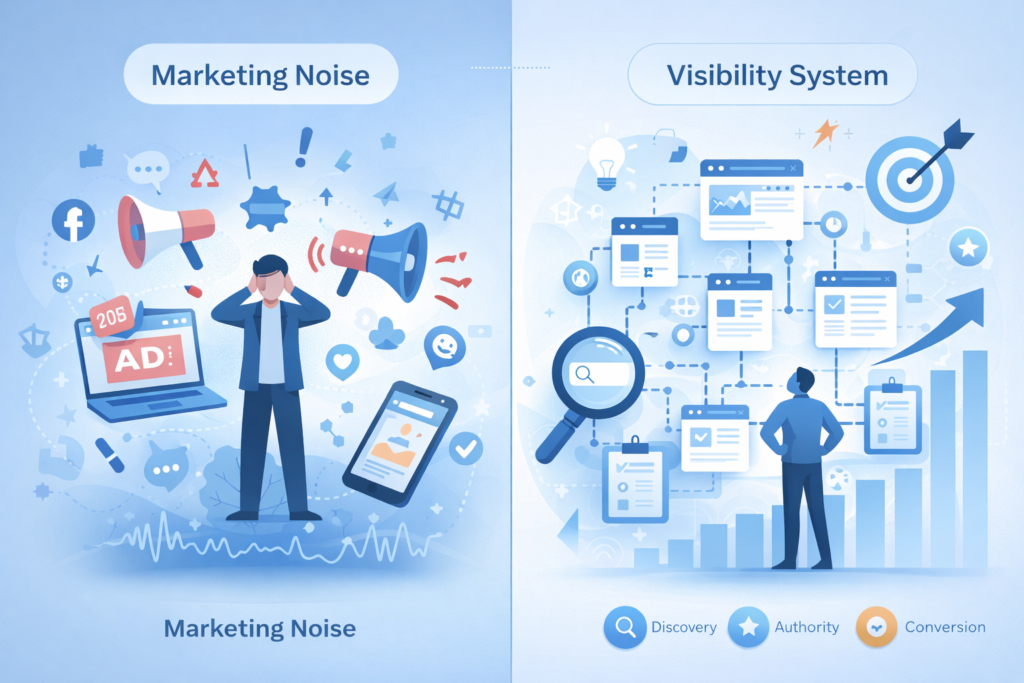
    marketing alone cannot create digital visibility without system
    Marketing creates activity. Systems create visibility.

    Marketing today is louder than ever. Brands post daily, run ads, share updates, and publish content across multiple platforms.

    Yet increased activity does not automatically create visibility.

    Marketing generates reach. But visibility requires sustained discoverability.

    A campaign may create temporary attention.A post may generate short-term engagement.But without structural search presence and authority signals, that attention fades quickly.

    This is why many businesses feel they are constantly “starting over” with every new campaign.

    Marketing works in bursts. Visibility works in continuity.

    When marketing operates without a supporting visibility system, results reset instead of compounding.

    In contrast, businesses that integrate marketing into a structured visibility framework experience cumulative growth — where each action strengthens long-term discoverability rather than replacing it.

    The 3 Layers of Digital Visibility

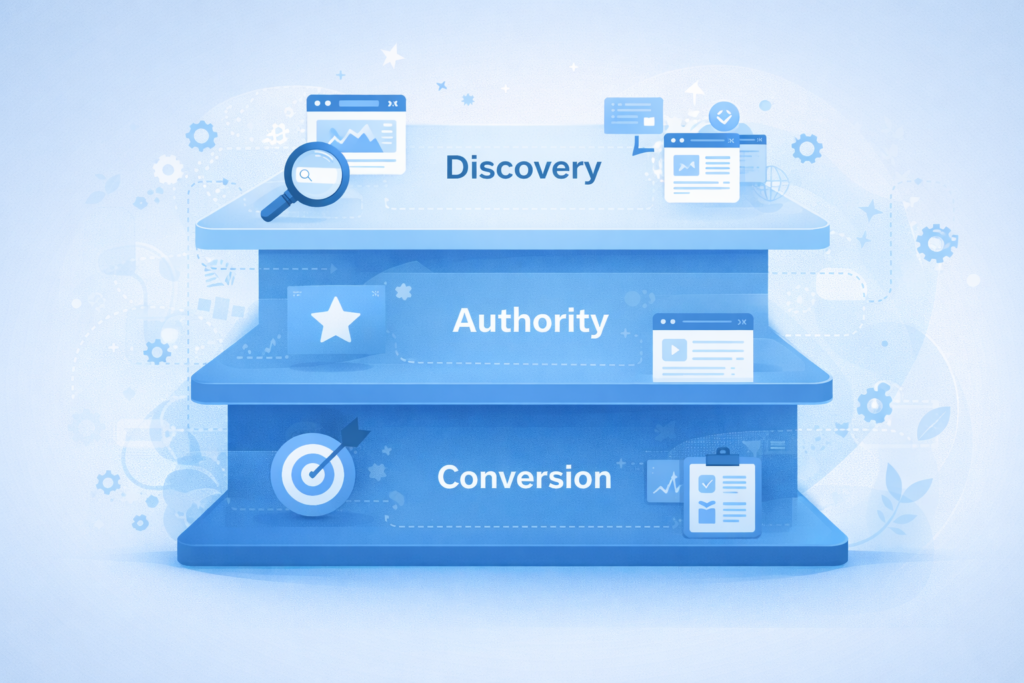
    three layers of digital visibility visibility authority conversion system
    The three integrated layers that turn content into sustainable digital visibility.

    Digital visibility is not created by a single channel. It emerges when multiple layers of presence reinforce each other.

    Most businesses operate in only one layer — usually social or advertising. But sustainable discoverability requires a structured combination of three distinct visibility layers.

    1. Search Visibility

    Search visibility determines whether a brand can be found when demand already exists.

    When people actively look for solutions, answers, or services, search-driven visibility places a brand directly in front of intent.

    This layer includes organic search presence, evergreen content, and topic authority.

    Search visibility compounds over time — each page, article, and keyword strengthens long-term discoverability.

    Without search visibility, brands remain dependent on continuous promotion to be seen.

    2.Authority visibility

    Authority visibility determines whether a brand is trusted once discovered.

    Modern audiences evaluate credibility quickly. They look for expertise signals, depth of knowledge, and consistency of positioning.

    Authority is built through structured content ecosystems, topical depth, and aligned messaging across channels.

    When authority visibility is strong, audiences perceive the brand as a reliable source rather than just another option.

    This layer transforms attention into trust.

    3. Conversion Visibility

    Conversion visibility determines whether attention becomes action.

    Even visible and trusted brands fail if pathways to engagement are unclear.

    Conversion visibility includes clear positioning, aligned offers, and frictionless next steps for the audience.

    It ensures that when discovery and trust occur, progression naturally follows.

    This layer transforms trust into measurable growth.

    True digital visibility appears only when all three layers operate together.

    Search creates discovery. Authority creates trust. Conversion creates action.

    When these layers integrate, visibility stops fluctuating and begins compounding — turning presence into predictable demand.

    What a True Visibility System Looks Like

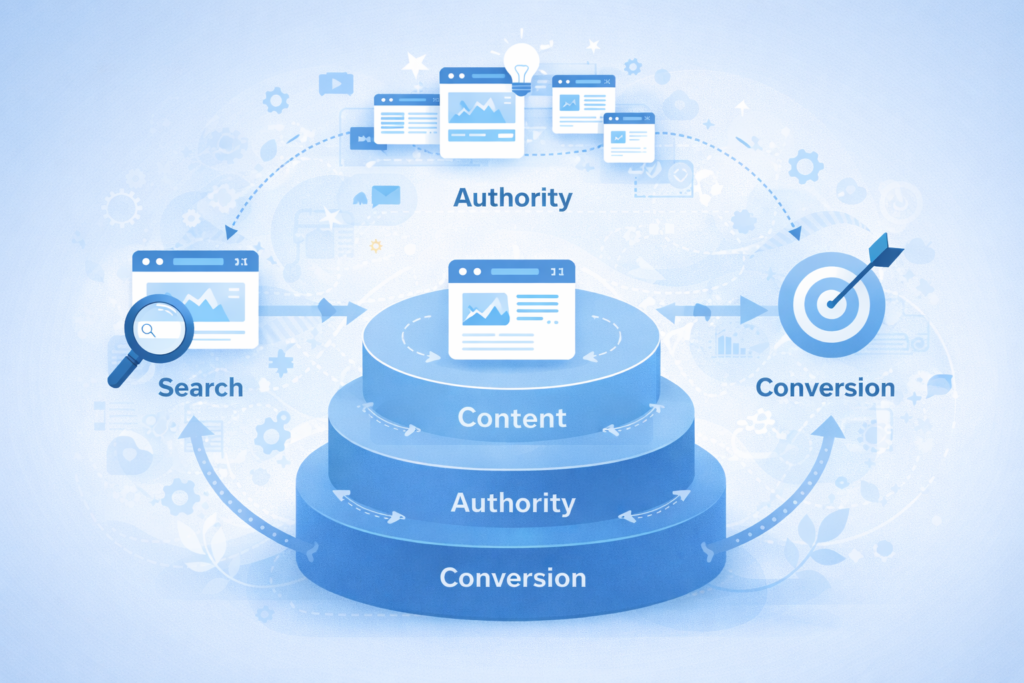
    true digital visibility system showing content search authority and conversion connected
    A real digital visibility system connects content, search, authority, and conversion into one growth loop.

    A true visibility system is not a collection of marketing activities. It is an integrated structure where discovery, trust, and conversion continuously reinforce each other.

    Most brands operate in campaigns.Visibility systems operate in cycles.

    In campaigns, attention spikes and disappears. In systems, attention compounds and stabilizes.

    A true visibility system has three defining characteristics.

    Continuous Discovery

    Content, search presence, and topic coverage ensure the brand is consistently findable.

    New audiences enter the ecosystem without active promotion because discovery channels remain active over time.

    Visibility no longer depends on posting frequency or advertising spend.

    Reinforced Authority

    Every piece of content connects to a larger expertise structure.

    Instead of isolated posts, the brand builds depth around core themes, perspectives, and solutions.

    This repetition with expansion strengthens credibility and recognition.

    Audiences begin to associate the brand with specific expertise domains.

    Guided Conversion

    Clear pathways exist from awareness to engagement.

    Content naturally leads toward deeper resources, offers, or next steps aligned with audience needs.

    Rather than forcing conversion, the system enables progression.

    When these three functions operate together, visibility shifts from effort-based to infrastructure-based.

    Discovery continues. Authority deepens. Conversion flows.

    This is what differentiates brands that remain visible from those that repeatedly restart attention.

    How Smart Businesses Build Discoverability

    Smart businesses do not chase attention.They engineer discoverability.

    Instead of relying on single channels or sporadic campaigns, they construct visibility ecosystems designed to be found repeatedly.

    Discoverability is built through structured presence, not volume.

    There are four core practices that consistently visible brands implement.

    Topic Ownership

    They define clear problem and solution territories they want to be known for.

    Content, messaging, and positioning repeatedly reinforce these themes.

    Over time, audiences associate the brand with specific expertise areas.

    The brand becomes searchable by topic, not just by name.

    Search-Aligned Content

    They create content aligned with real audience queries, needs, and decision stages.

    Educational, comparative, and solution-focused content ensures presence across the discovery journey.

    Search visibility compounds because content addresses enduring questions rather than temporary trends.

    Traffic becomes cumulative instead of episodic.

    Structured Content Networks

    Content pieces connect to each other intentionally.

    Articles reference related insights, deeper guides, and supporting perspectives.

    This internal connectivity strengthens both search signals and user understanding.

    Instead of scattered posts, the brand builds knowledge architecture.

    Consistent Signal Reinforcement

    Positioning, messaging, visuals, and expertise themes remain stable across platforms.

    Audiences encounter the same value promise repeatedly in different contexts.

    Recognition grows because signals are coherent, not fragmented.

    The brand becomes mentally retrievable even before search occurs.

    Discoverability does not emerge from activity.It emerges from structure.

    Brands that build discoverability systems reduce dependence on promotion and increase inevitability of discovery.

    They are not louder. They are easier to find.

    From Invisible to In-Demand: The Visibility Shift

    The transition from invisibility to demand does not happen through a single tactic.It occurs when visibility stops being accidental and becomes intentional.

    Invisible businesses rely on isolated actions.Visible businesses operate through integrated systems.

    This shift changes how audiences encounter and remember a brand.

    Instead of sporadic exposure, visibility becomes continuous. Instead of occasional trust, authority becomes stable. Instead of uncertain interest, demand becomes predictable.

    Over time, three noticeable changes emerge.

    Discovery Becomes Consistent

    The brand begins appearing in search results, recommendations, and content pathways regularly.

    New audiences encounter it without direct promotion.

    Visibility moves from effort-driven to presence-driven.

    Trust Builds Before Contact

    Prospects arrive already informed and confident.

    They have consumed content, understood positioning, and recognized expertise.

    The brand is perceived as a known authority rather than an unknown option.

    Demand Replaces Outreach

    Instead of chasing attention, attention begins to flow toward the brand.

    Inbound inquiries increase. Engagement deepens. Conversion friction decreases.

    The business shifts from seeking visibility to managing demand.

    This is the visibility shift.

    It does not require louder marketing or constant activity. It requires structural discoverability.

    When discovery, authority, and conversion integrate, invisibility dissolves — and demand becomes the natural outcome of presence.

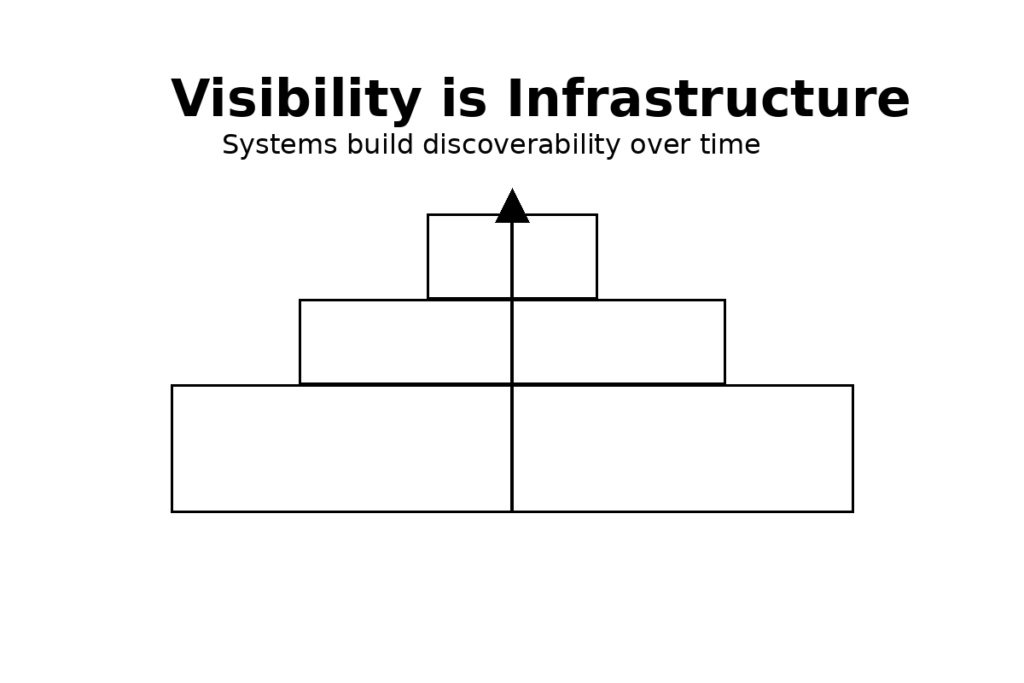
    Conclusion: Visibility Is Not Promotion — It Is Infrastructure

    digital visibility infrastructure system building long-term discoverability
    True visibility comes from infrastructure, not promotion.

    Most businesses approach visibility as a promotional activity. They attempt to become visible by increasing output, frequency, or advertising.

    But visibility that depends on constant promotion is unstable by nature.

    True visibility behaves differently.

    It persists beyond individual campaigns. It compounds across content and time. It strengthens recognition and trust with each interaction.

    This persistence is not created by activity.It is created by infrastructure.

    A visibility infrastructure integrates discovery channels, authority signals, and conversion pathways into a coherent system.

    Once established, this system continues generating presence even when active promotion pauses.

    This is why some brands remain consistently discoverable while others repeatedly restart attention.

    Visibility, in its most durable form, is not marketing intensity. It is structural positioning.

    Businesses that recognize this shift stop chasing exposure and begin building discoverability.

    And when discoverability becomes structural, invisibility is no longer possible.

  • Digital Problem Solving Framework: How Businesses Fix Complex Problems Step-by-Step in 2026

    Digital Problem Solving Framework: How Businesses Fix Complex Problems Step-by-Step in 2026

    In 2026, businesses are no longer struggling because of a lack of tools—they struggle because they lack structured problem-solving systems. Digital transformation, automation, and AI are everywhere, yet many companies still face delays, confusion, and poor decision-making.

    This is where a digital problem solving framework becomes essential.

    A clear framework helps businesses identify problems accurately, choose the right digital solutions, and fix issues faster without wasting time or resources. In this guide, you’ll learn how modern businesses solve complex challenges using a practical, step-by-step digital problem solving approach.

    What Is Digital Problem Solving?

    Digital problem solving framework showing structured approach to business challenges

    A digital problem-solving approach is a structured system that helps businesses analyze problems, select digital tools, and implement solutions logically.

    Instead of reacting emotionally or guessing solutions, this framework focuses on:

    • Clear problem identification
    • Data-driven analysis
    • Smart digital tools
    • Measurable outcomes

    It turns problem solving into a repeatable process, not a one-time fix.

    Why Traditional Problem Solving No Longer Works

    Traditional methods rely heavily on:

    • Manual analysis
    • Personal opinions
    • Trial and error
    • Slow decision cycles

    In fast-changing digital environments, this leads to:

    • Missed opportunities
    • Higher costs
    • Delayed growth
    • Poor scalability

    A digital problem solving framework replaces guesswork with systems, data, and automation.

    Core Elements of a Digital Problem Solving Framework

    1.Problem Identification

    Most businesses fail at the first step—they treat symptoms, not root causes.

    Instead of asking:

    “Why are sales low?”

    Ask:

    Where exactly is the drop happening?

    Is it traffic, conversion, or retention?

    Which data confirms this problem?

    Clear problem definition saves time later.

    2. Data Collection and Analysis

    Digital problem solving depends on real data, not assumptions.

    Businesses should analyze:

    • Website analytics
    • User behavior
    • Conversion paths
    • Operational metrics

    Data shows what is broken—and what is working.

    3.Solution Mapping with Digital Tools

    Once the problem is clear, businesses map solutions using digital tools such as:

    • Automation platforms
    • Analytics dashboards
    • CRM systems
    • Workflow tools

    The goal is not to use more tools—but to use the right tools for the right problem.

    4.Implementation and Testing

    Every solution should be tested before full rollout.

    Best practices include:

    • Small-scale implementation
    • Performance tracking
    • A/B testing where possible
    • Continuous feedback

    Testing prevents costly mistakes.

    5.Optimization and Continuous Improvement

    Digital problem solving never ends.

    Businesses should:

    • Review performance regularly
    • Improve weak areas
    • Adapt to new trends
    • Update systems as needed

    This creates long-term resilience.

    Common Business Problems This Framework Solves

    A digital problem solving framework is used to fix:

    • Slow workflows
    • Poor customer experience
    • Low conversion rates
    • Inefficient marketing funnels
    • Data mismanagement
    • Scaling challenges

    Instead of patching issues, businesses build strong systems.

    Tools Used in Digital Problem Solving

    Analytics, automation, and project management tools used in digital problem solving

    Digital problem solving relies on the right combination of tools rather than random software usage. These tools help businesses analyze problems, automate tasks, and make informed decisions.

    Commonly used tools include:

    • Analytics tools to track performance and user behavior
    • Automation platforms to reduce manual and repetitive work
    • Project management tools to streamline workflows
    • CRM systems to manage customer data and interactions
    • AI-assisted tools to identify patterns and predict outcomes

    The goal is not to use many tools, but to choose tools that directly solve the identified problem.

    Real-World Examples of Digital Problem Solving

    Real world examples of businesses using smart digital solutions to improve efficiency

    Businesses across industries use digital problem solving to fix everyday challenges.

    For example:

    • An ECommerce brand uses analytics to identify checkout issues and improve conversions
    • A service business automates customer support to reduce response time
    • A company uses dashboards to monitor real-time performance and adjust strategy
    • Teams use cloud tools to improve collaboration and productivity

    These examples show how structured digital problem solving leads to measurable improvements.

    Mistakes Businesses Make While Solving Problems

    Many businesses fail at digital problem solving due to common mistakes, such as:

    • Jumping to solutions without defining the real problem
    • Relying on assumptions instead of data
    • Using complex tools for simple problems
    • Ignoring testing and performance tracking
    • Treating digital solutions as one-time fixes

    Avoiding these mistakes helps businesses save time, money, and effort.

    How Digital Problem Solving Supports Long-Term Growth

    Digital problem solving is not just about fixing immediate issues—it helps build sustainable systems.

    When businesses use structured digital problem solving:

    • Processes become more efficient
    • Decisions improve with data support
    • Systems scale easily with growth
    • Teams adapt faster to change

    This approach creates a strong foundation for long term digital growth and stability.

    Final Thoughts

    A digital problem solving framework helps businesses think clearly, act smartly, and grow consistently. It transforms problem solving from chaos into a system.

    Businesses that master this approach don’t just solve problems—they build digital resilience and long-term success.

  • Digital Problem Solving: 7 Smart Strategies for Modern Businesses

    Digital Problem Solving: 7 Smart Strategies for Modern Businesses

    Digital problem solving helps businesses identify challenges and analyze data effectively.

    By using smart tools and structured strategies, companies can improve decision-making and long-term performance.

    In today’s digital environment, businesses face complex challenges

    To understand the complete step-by-step approach, explore our our Digital Problem Solving Framework. That require structured and data-driven solutions. Digital problem solving focuses on using technology, analytics, and logical frameworks to understand root causes, improve decision-making, and create scalable solutions that support long-term business growth.

    What Is Digital Problem Solving?

    Digital problem solving process for modern businesses using smart digital solutions

    Smart digital solutions is the process of identifying business challenges and addressing them through digital tools, data analysis, and structured frameworks. Instead of relying on guesswork or manual methods, it uses technology to understand root causes, optimize processes, and implement smarter solutions. This approach enables businesses to make informed decisions, improve efficiency, and adapt quickly to changing market demands.

    Common Business Problems That Need Smart Solutions

    Modern businesses face a range of challenges that cannot be solved effectively with traditional methods alone. Common problems include inefficient workflows, lack of real-time data, poor customer experience, slow decision-making, and scalability issues. Many businesses also struggle with disconnected systems, manual processes, and an inability to adapt to rapid digital changes. Smart digital solutions help businesses identify these gaps, streamline operations, and create systems that are more agile, data-driven, and future-ready.

    Core Pillars of Smart Digital Solutions

    Smart digital solutions are built on a few foundational pillars that work together to solve business problems effectively. Ignoring any one of these pillars can limit results, even if the right tools are in place. Successful digital problem solving requires a balanced approach that combines strategy, technology, and continuous improvement.

    Strategy & Planning

    Every smart digital solution starts with a clear strategy. Businesses must define their goals, understand their challenges, and align digital efforts with long-term objectives. Strategic planning ensures that technology is used purposefully rather than as a quick fix.

    Technology & Automation

    Technology enables businesses to automate repetitive tasks, improve efficiency, and reduce human error. Automation tools help streamline workflows, save time, and allow teams to focus on higher-value activities that drive growth.

    Data & Insights

    Data-driven decision-making is a critical pillar of digital problem solving. By analyzing performance data, user behavior, and operational metrics, businesses gain insights that help them identify issues early and optimize processes continuously.

    User Experience

    Smart solutions must prioritize user experience, whether for customers or internal teams. Systems that are intuitive, accessible, and responsive improve adoption, engagement, and overall effectiveness.

    Continuous Optimization

    Digital solutions are not one-time implementations. Continuous testing, monitoring, and optimization ensure that systems evolve with changing business needs and market conditions.

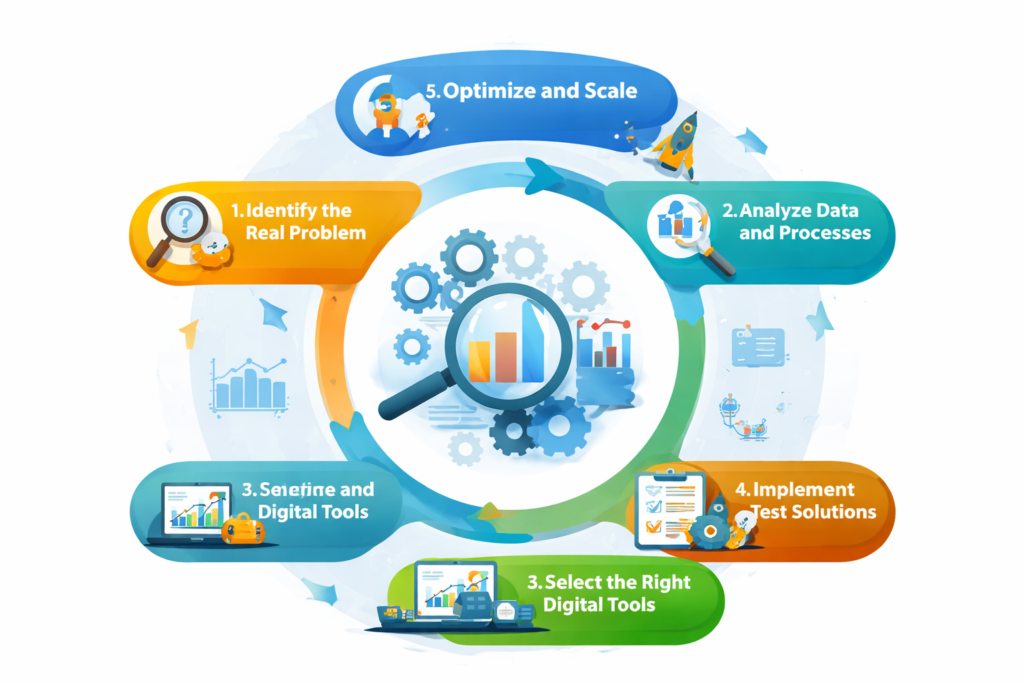
    Digital Problem Solving Framework (Smart Solve Method)

    Digital problem solving framework for modern businesses using a structured smart solve method

    A structured framework helps businesses approach problems logically instead of reacting impulsively. The Smart Solve Method focuses on understanding issues deeply and implementing digital solutions that are scalable and measurable.

    1. Identify the Real Problem

    The first step is to clearly define the problem. Many businesses treat symptoms instead of root causes. Identifying the real issue ensures that digital solutions address the core challenge rather than temporary gaps.

    2. Analyze Data and Processes

    Once the problem is identified, businesses must analyze existing data, workflows, and systems. This step reveals inefficiencies, bottlenecks, and opportunities for improvement using digital tools and insights.

    3. Select the Right Digital Tools

    Not every tool fits every problem. Choosing the right technology—whether automation, analytics, or collaboration tools—ensures solutions remain effective and aligned with business goals.

    4. Implement and Test

    Solutions Implementation should be gradual and measurable. Testing solutions on a smaller scale helps businesses evaluate performance, reduce risk, and make adjustments before full deployment.

    5. Optimize and Scale

    Digital problem solving is an ongoing process. Continuous optimization allows businesses to refine solutions, adapt to changes, and scale successful systems for long-term growth.

    Real-World Examples (Conceptual)

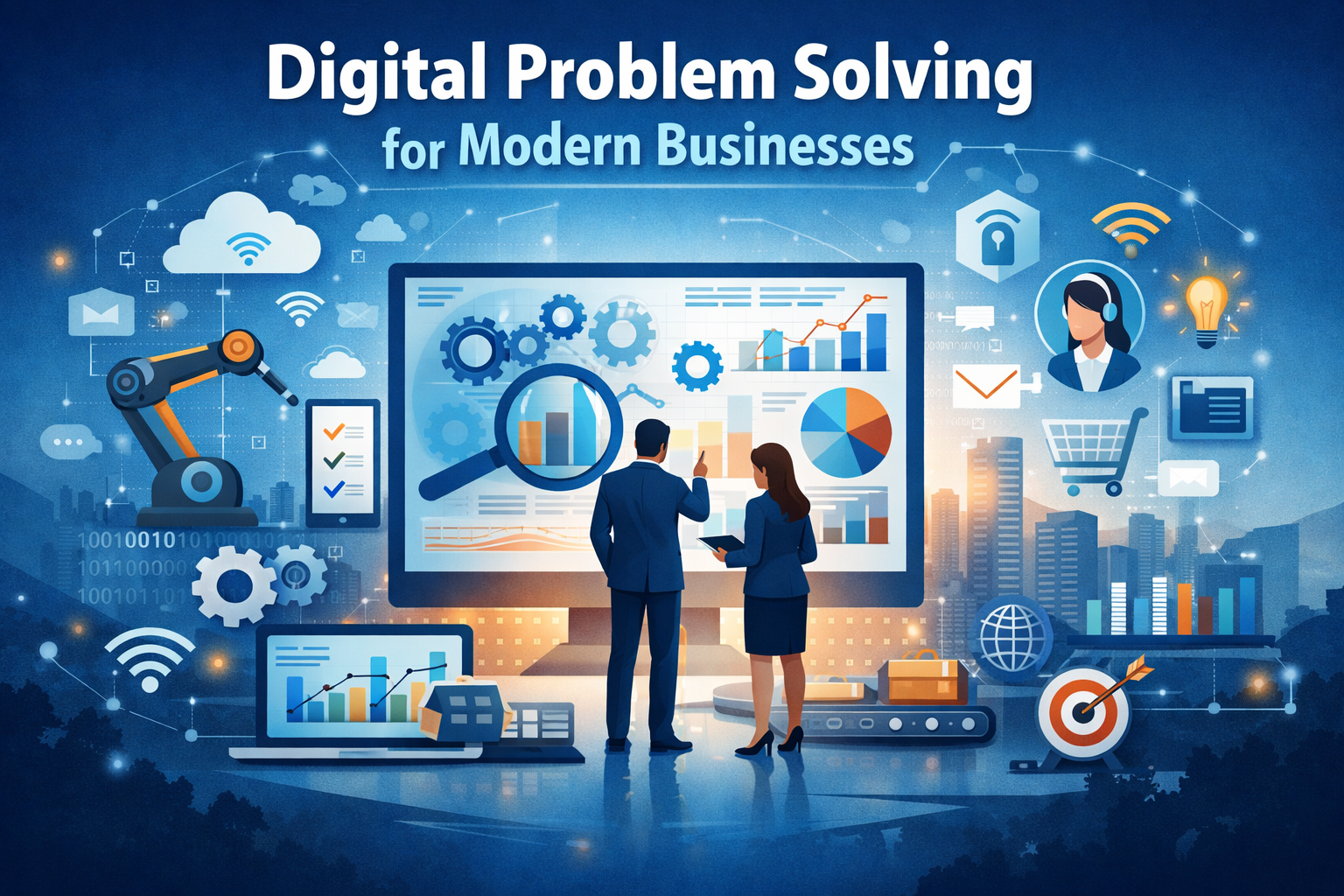
    Digital problem solving using smart technologies, data analysis dashboards, automation tools, and AI-driven business solutions”

    Digital problem solving can be applied across different business areas, regardless of industry size or type. For example, a growing business struggling with manual operations can use automation tools to streamline workflows, reduce errors, and save time. By digitizing repetitive tasks, teams can focus more on strategy and innovation rather than daily operational issues.

    Another common example is customer experience improvement. Businesses facing low engagement or poor retention often use data analytics and digital platforms to understand user behavior. These insights help optimize websites, personalize communication, and improve overall user journeys, leading to stronger relationships and higher satisfaction.

    In decision-making, many businesses rely on assumptions instead of real data. Digital problem solving introduces dashboards, performance tracking, and reporting systems that provide real-time insights. This enables leaders to make informed decisions, respond faster to challenges, and plan future growth with confidence.

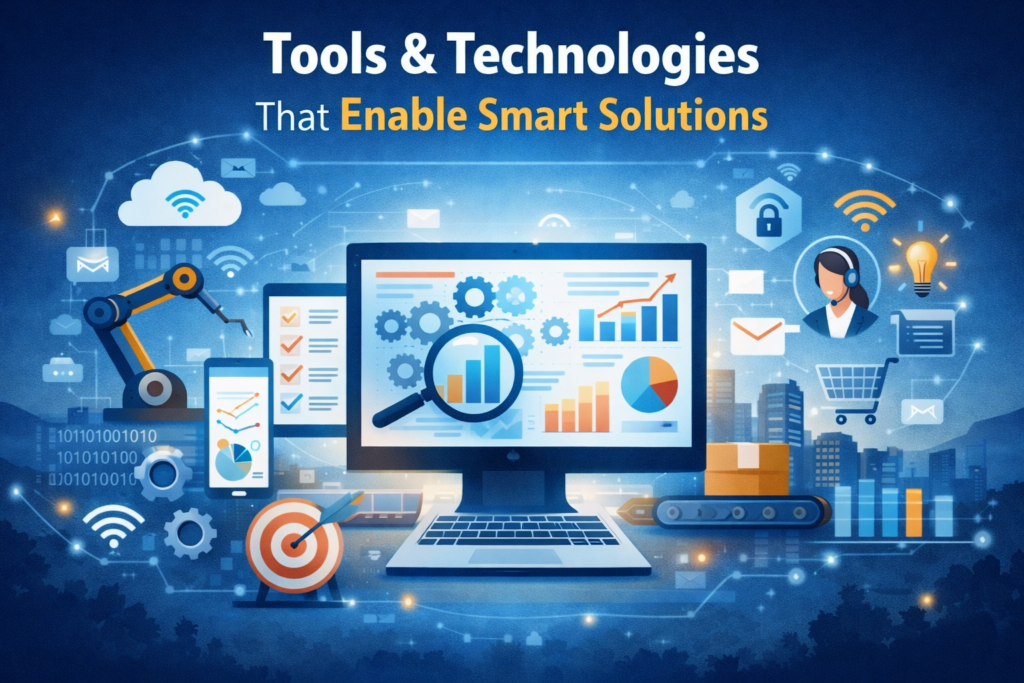
    Tools & Technologies That Enable Smart Solutions

    Digital tools and technologies enabling smart problem solving and automation

    Digital problem solving relies on the right mix of tools and technologies to turn strategy into action. These tools help businesses automate processes, analyze data, and improve collaboration across teams. Instead of using technology randomly, smart solutions focus on selecting tools that directly address specific business challenges.

    Automation platforms reduce manual work and increase efficiency by streamlining repetitive tasks. Analytics tools provide valuable insights into performance, customer behavior, and operational gaps. Collaboration and project management tools help teams stay aligned, improve communication, and execute solutions more effectively. Together, these technologies create a digital ecosystem that supports smarter decision-making and scalable growth.

    Choosing the right tools is not about adopting every new technology but about using solutions that integrate well with existing systems and support long-term business objectives.

    Why Long-Term Digital Strategy Matters

    A long-term digital strategy ensures that problem solving efforts remain consistent, scalable, and aligned with business goals. Short-term fixes may deliver temporary relief, but they often fail to address underlying issues or support sustainable growth. A strategic approach helps businesses build systems that evolve with changing market conditions and customer expectations.

    By focusing on long-term digital planning, businesses can improve efficiency, reduce operational risks, and make better use of technology investments. A clear strategy also enables teams to measure progress, learn from data, and continuously optimize solutions over time. Ultimately, a long-term digital strategy transforms problem solving from a reactive task into a proactive growth engine.

    Final Thoughts: Building Smarter Businesses

    Digital problem solving is no longer optional for modern businesses—it is a necessity. As technology continues to shape how businesses operate and compete, adopting a structured, digital-first approach to problem solving becomes essential for long-term success. Businesses that invest in smart solutions are better equipped to adapt, innovate, and grow sustainably.

    By combining strategy, technology, data, and continuous optimization, digital problem solving helps businesses move beyond short-term fixes and build resilient systems. A thoughtful digital approach not only solves existing challenges but also prepares businesses for future opportunities in an increasingly digital landscape.