
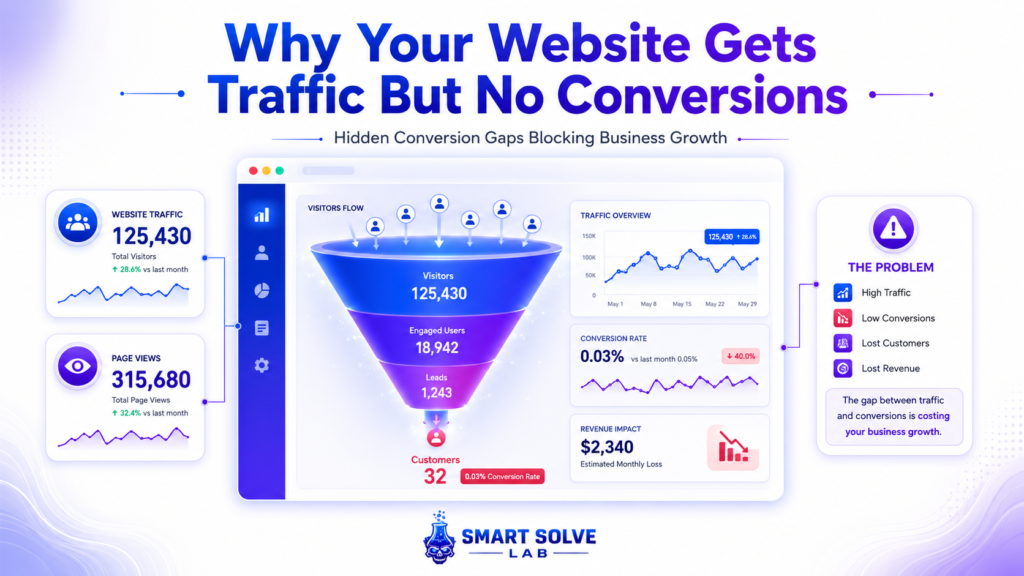
Website Traffic But No Conversions
Many businesses believe that increasing website traffic is the key to growing sales. They invest in SEO, publish more content, improve their marketing, and celebrate when website visitors begin to increase. Yet despite growing traffic, conversions often remain frustratingly low.
This creates one of the biggest challenges in digital growth. If people are finding your website, why aren’t they becoming customers? Why do traffic reports continue to improve while leads, sales, and revenue remain almost unchanged?
The answer is that traffic and conversions measure two completely different outcomes. Traffic shows that people are arriving on your website, while conversions measure whether those visitors take meaningful action. A website can attract thousands of visitors and still struggle to generate business growth.
In most cases, the problem is not a lack of traffic. Hidden conversion gaps quietly weaken the customer journey long before a visitor reaches the point of taking action. Because these gaps are difficult to recognize, many businesses continue focusing on attracting more visitors instead of understanding why their existing traffic isn’t converting.
As a result, they publish more content, increase advertising budgets, redesign landing pages, or experiment with new marketing tactics without addressing the real cause of the problem. These efforts may increase visibility, but they rarely improve conversions when the underlying issues remain undiagnosed.
In this guide, you’ll discover why websites can generate consistent traffic while still failing to convert visitors into customers. More importantly, you’ll learn how to identify the hidden conversion gaps that prevent business growth and understand why accurate diagnosis should always come before optimization.
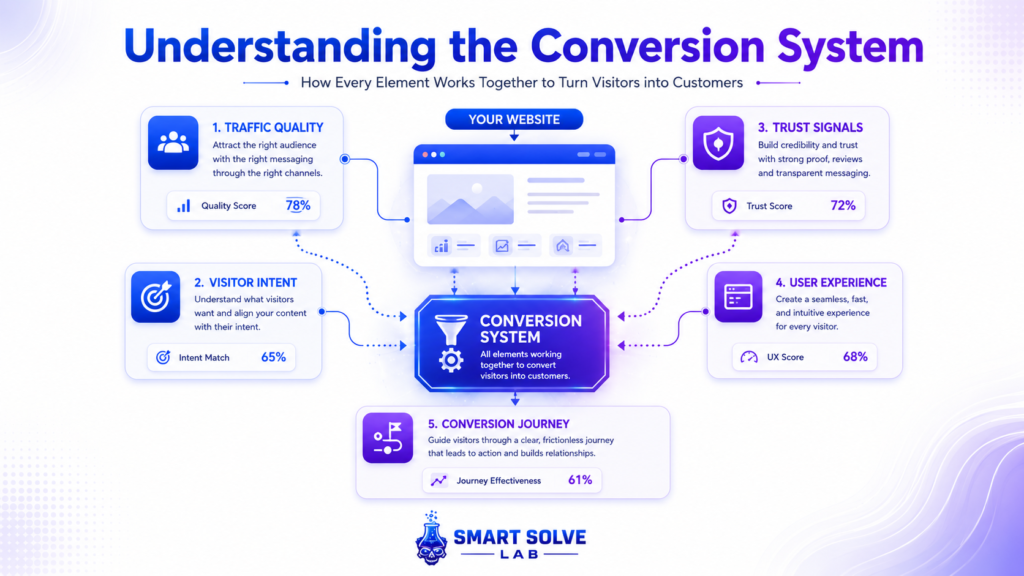
Table of Contents
What Does “Traffic But No Conversions” Really Mean?
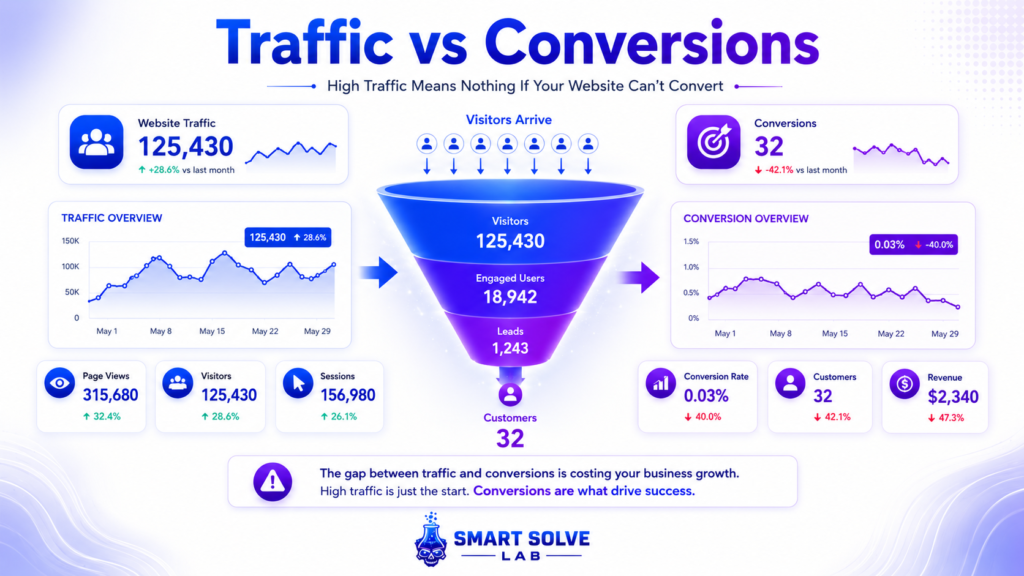
Many businesses assume that increasing website traffic automatically leads to more customers. While this sounds logical, it rarely reflects how digital growth actually works. Traffic simply indicates that people are visiting your website. It does not guarantee that those visitors trust your business, understand your offer, or feel motivated to take action.
A conversion occurs when a visitor completes a meaningful action that supports your business goals. This action may include making a purchase, submitting a contact form, requesting a quote, booking a consultation, downloading a resource, or subscribing to your email list. Without these actions, traffic alone creates very little business value.
The confusion begins when businesses focus on visitor numbers instead of visitor behavior. A website may receive thousands of monthly visits while generating very few leads or sales. Looking only at traffic reports can create the false impression that growth is happening, even though business outcomes remain unchanged.
The hidden reality is that traffic and conversions measure different stages of the customer journey. Traffic reflects visibility. Conversions reflect trust, relevance, clarity, and decision-making. A website can successfully attract visitors while simultaneously failing to convince those visitors to move forward.
This misunderstanding often leads businesses to diagnose the wrong problem. Instead of asking why visitors are not converting, they continue investing more time and money into generating additional traffic. As a result, the real conversion gaps remain hidden beneath improving traffic metrics.
Real Business Scenario
Imagine an online business that increases its monthly website traffic from 5,000 to 15,000 visitors through consistent SEO and content marketing. Although traffic triples, the number of enquiries and sales remains almost identical. The business believes it has a traffic problem because revenue is not growing, when the actual issue lies within the conversion journey itself.
What This Means
Website traffic should never be viewed as the final measure of success. It is only the beginning of the customer journey. Sustainable business growth depends not only on attracting visitors but also on understanding why those visitors decide not to become customers.
Before searching for more traffic, businesses should first determine whether hidden conversion gaps are preventing existing visitors from taking action. Accurate diagnosis always comes before effective optimization.
Why High Traffic Doesn’t Always Create More Customers
Many businesses view growing website traffic as clear evidence that their digital strategy is working. While increasing traffic is an important achievement, it represents only one stage of the customer journey. Business growth depends on what visitors do after they arrive, not simply on how many people visit the website.
Traffic Is Not Buying Intent
Not every website visitor is ready to become a customer. Some visitors are gathering information, comparing solutions, conducting research, or simply exploring a topic. High traffic may indicate strong visibility, but it does not automatically reflect strong buying intent.
More Visitors ≠ More Revenue
One of the biggest misconceptions in digital marketing is assuming that more visitors naturally produce more sales. In reality, revenue depends on how effectively a website guides the right visitors toward meaningful action. A website can continue attracting traffic while generating very little business value.
Many businesses experience exactly this situation, where high website traffic doesn’t produce revenue because the underlying conversion process remains weak.
The Hidden Conversion Gap
When traffic grows without conversions, the underlying problem usually exists somewhere between visitor arrival and customer action. Visitors may not immediately understand the value being offered, trust the business enough to continue, or find a clear path toward making a decision.
These hidden gaps rarely appear inside traffic reports, making them difficult to recognize without a structured diagnostic approach.
Why Businesses Misjudge Growth
Businesses often celebrate increasing visitor numbers while overlooking declining conversion efficiency. As long as traffic continues growing, poor conversion performance can remain hidden for months before its impact becomes visible through stagnant sales and revenue.
True business growth requires balancing visibility with conversion performance. Measuring traffic without understanding conversions provides only part of the overall picture.
Before investing additional resources into attracting more visitors, businesses should first determine whether their existing traffic is already revealing hidden conversion problems that need to be diagnosed.
The Five Hidden Conversion Gaps Most Businesses Never Diagnose
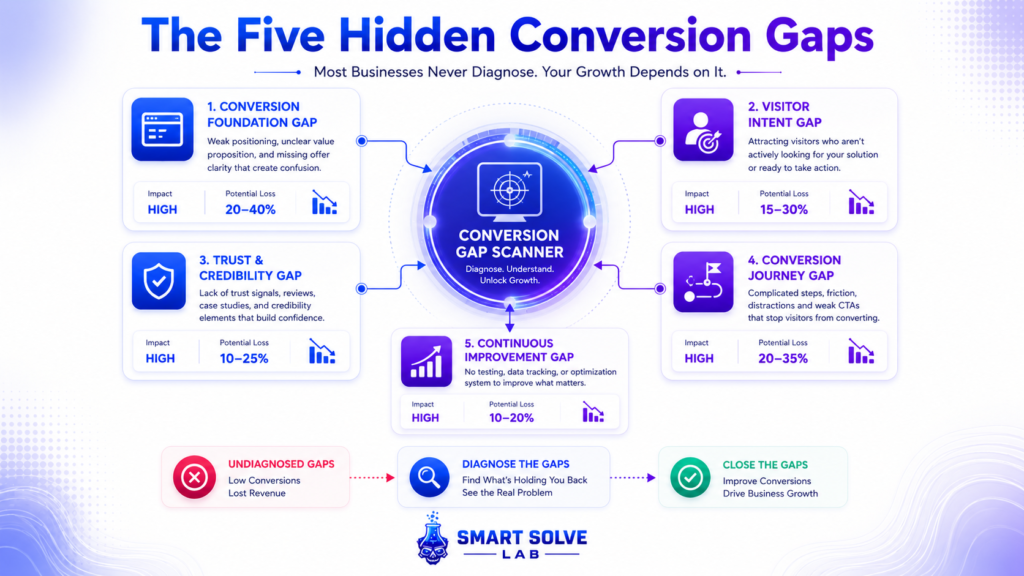
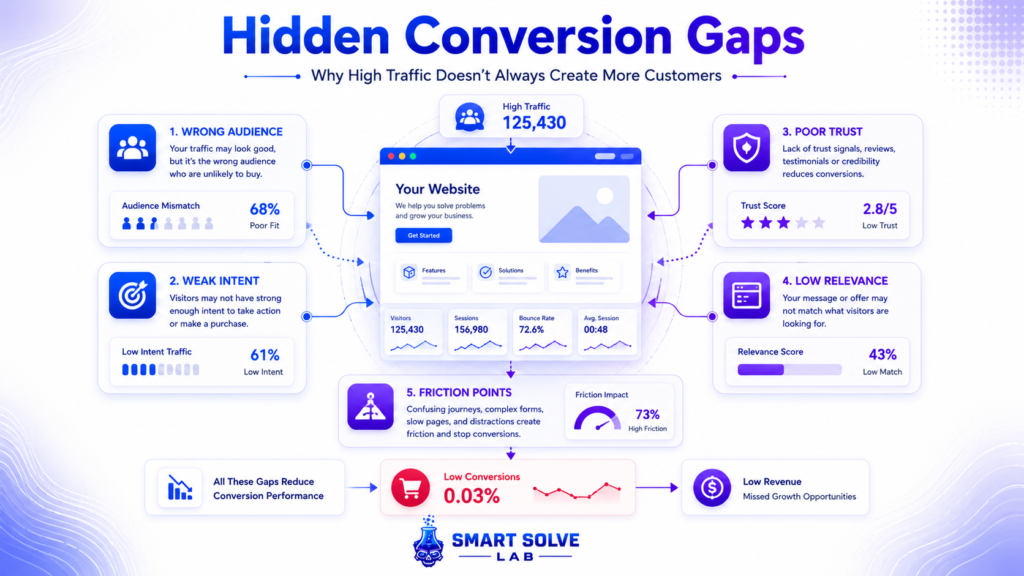
Many businesses assume that poor conversion performance is caused by a single problem. In reality, low conversions usually result from multiple hidden gaps working together throughout the customer journey. Each gap weakens the visitor’s confidence, making it less likely that they will take meaningful action.
Understanding these gaps is not about finding quick fixes. It is about recognizing where the customer journey begins to lose momentum before visitors become customers.
Conversion Foundation Gap
Every successful website starts with a strong conversion foundation. If business goals, offers, messaging, or calls to action lack clarity, visitors struggle to understand what they should do next. Even high-quality traffic cannot compensate for an unclear foundation.
Visitor Intent Gap
Not every visitor arrives with the same purpose. Some are researching, others are comparing options, while only a small percentage may be ready to buy. When website content fails to match visitor intent, people often leave without progressing further in the buying journey.
Trust & Credibility Gap
Visitors rarely convert unless they trust the business behind the website. Credibility is influenced by factors such as expertise, transparency, customer confidence, and overall professionalism. Businesses experiencing trust gaps often prevent visitors from becoming customers, even when traffic remains healthy.
Conversion Journey Gap
A visitor may initially be interested but still fail to convert if the journey becomes confusing. Unclear navigation, distracting layouts, inconsistent messaging, or unnecessary friction can interrupt the decision-making process before action is taken.
Continuous Improvement Gap
Customer behaviour, search trends, and market expectations constantly evolve. Businesses that never review or reassess their conversion performance often experience declining results over time, even when traffic remains stable.Regularly reviewing conversion rate optimization (CRO) best practices can also help businesses recognize hidden performance gaps before they become long-term problems.
What This Means
These conversion gaps rarely exist in isolation. They often reinforce one another, making the overall problem appear far more complicated than it actually is. Before changing website design, increasing marketing budgets, or generating more traffic, businesses should first identify which conversion gaps are creating the greatest impact on performance.
Clear diagnosis
Warning Signs Your Website Has a Conversion Problem
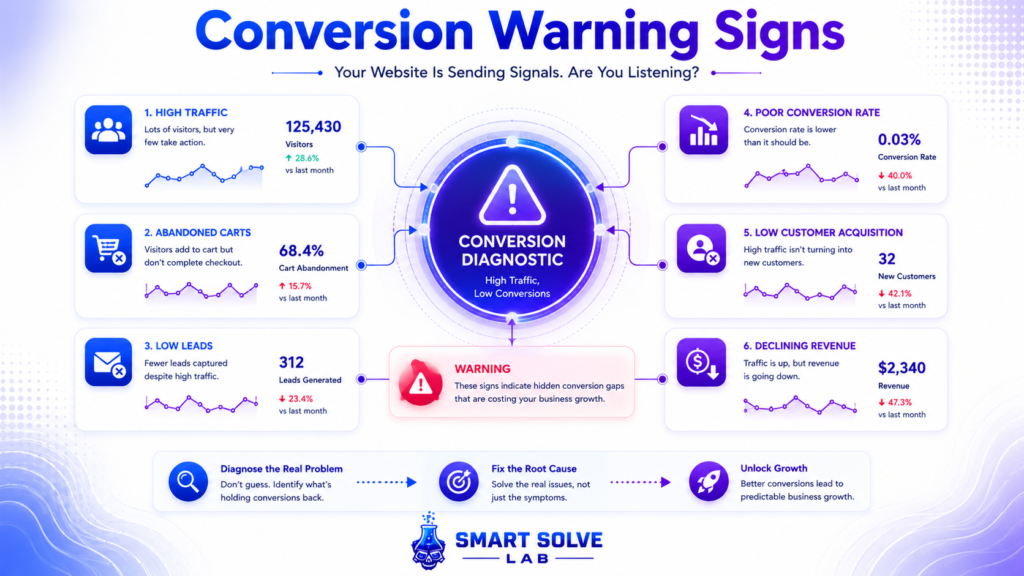
Many conversion problems develop gradually rather than appearing overnight. Businesses often continue generating traffic while overlooking the warning signs that indicate visitors are failing to move through the customer journey. Recognizing these signals early allows businesses to diagnose the real problem before valuable growth opportunities are lost.
High Traffic, Low Sales
Growing website traffic should normally create more opportunities for leads and customers. When traffic continues increasing but sales remain unchanged, it often indicates that visitors are arriving without progressing toward meaningful action.
Good Engagement, Poor Results
Visitors may spend time reading content, browsing multiple pages, or interacting with your website without taking the next step. Engagement is valuable, but engagement alone does not create business growth unless it leads to conversions.
Visitors Leave Without Taking Action
One of the clearest warning signs is when visitors regularly leave without completing your primary business goal. Whether the objective is generating enquiries, bookings, purchases, or sign-ups, low action rates usually indicate hidden conversion barriers rather than traffic problems.
Leads Never Become Customers
This often suggests that trust gaps prevent visitors from becoming customers, reducing confidence during the decision-making process.
Revenue Doesn’t Match Traffic
Perhaps the strongest warning sign is when business revenue remains flat despite continuous growth in website traffic. This disconnect usually indicates that the website is attracting attention without successfully turning that attention into measurable business outcomes.
What This Means
These warning signs should never be viewed
Why Conversion Problems Are Usually System Problems
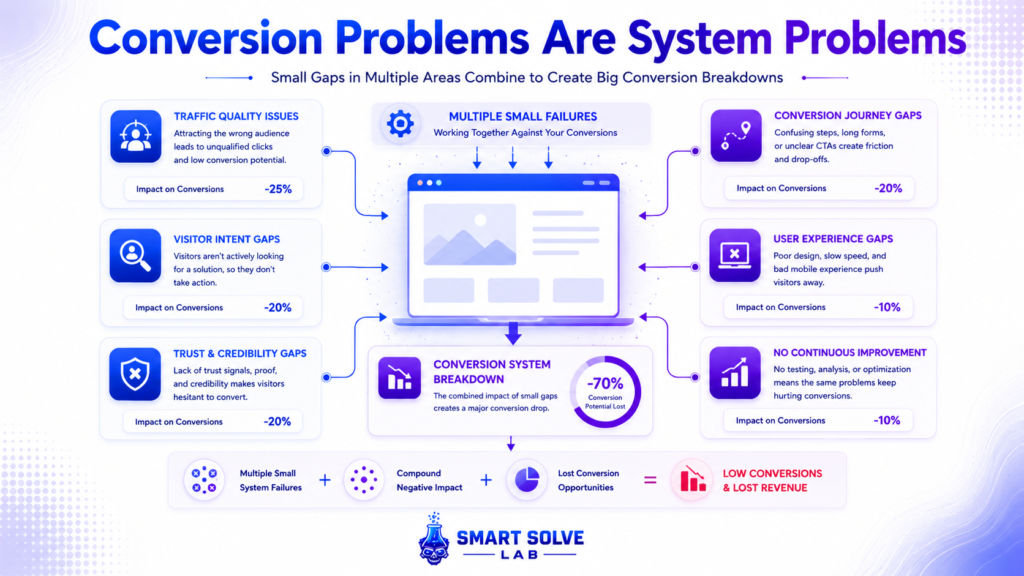
Many businesses search for a single explanation when conversions begin to decline. They blame website traffic, SEO, pricing, design, or advertising. While each of these factors can influence performance, conversion problems rarely originate from one isolated issue.
Instead, they usually develop because multiple parts of the customer journey become disconnected. Small weaknesses that appear insignificant on their own gradually combine into a much larger business problem.
Multiple Small Gaps Create One Big Problem
A website may attract relevant visitors but fail to build enough trust. Another business may have strong credibility but an unclear customer journey. Others may have excellent products but poor messaging or weak calls to action.
Individually, these weaknesses may appear minor. Together, however, they significantly reduce the likelihood of visitors becoming customers.
Why Businesses Fix Symptoms Instead of Causes
Most businesses respond by trying another marketing tactic. They publish more content, redesign landing pages, increase advertising budgets, or change SEO strategies.
However, content marketing fails to generate customers when the underlying conversion system remains weak.
These actions often improve activity but fail to improve business outcomes because the root cause has never been properly diagnosed.
Why Conversion Problems Keep Repeating
Businesses that focus only on symptoms often experience the same challenges repeatedly. Traffic grows, conversions remain inconsistent, new tactics are introduced, and frustration continues to increase.
Without understanding how different conversion gaps reinforce one another, temporary improvements rarely produce sustainable business growth.
What This Means
Conversion performance should be viewed as the outcome of an entire business system rather than a collection of isolated metrics. The strongest long-term improvements begin by identifying where the system is breaking down before deciding what needs to change.
Accurate diagnosis replaces guesswork with clarity, allowing businesses to make decisions based on evidence instead of assumptions.
From Diagnosis to Clarity
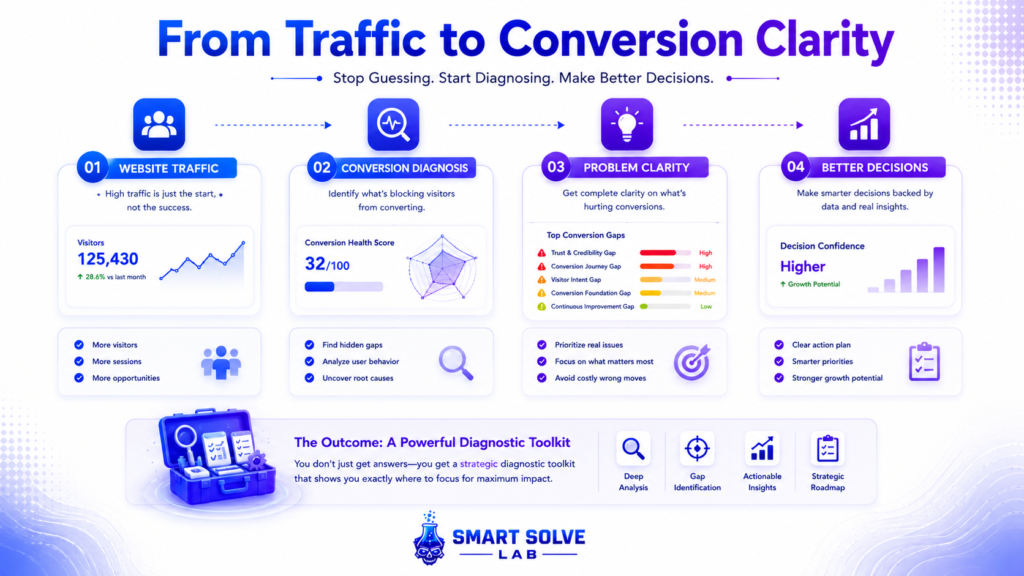
Increasing website traffic is not always the answer to improving business growth. When visitors continue arriving but conversions remain low, the most valuable next step is understanding where the customer journey begins to break down.
Many businesses invest in new marketing strategies before identifying the real cause of the problem. They redesign websites, publish more content, launch advertising campaigns, or experiment with new tactics without first diagnosing the hidden conversion gaps affecting performance.
Successful optimization always begins with clarity. Once businesses understand why visitors are not converting, every future decision becomes more focused, measurable, and effective.
If your website attracts visitors but struggles to generate enquiries, customers, or sales, the first priority should be identifying the specific conversion gaps that exist within your website rather than assuming more traffic will solve the problem.
The Conversion Gap Diagnostic Toolkit
is designed to help businesses systematically identify the hidden gaps affecting conversion performance. Instead of relying on assumptions, it provides a structured approach for understanding where opportunities are being lost and which areas require further investigation.
Once the diagnosis is complete, businesses can move forward with greater confidence, knowing they are solving the right problem instead of chasing temporary improvements.
Many businesses also discover that marketing campaigns work but revenue still doesn’t grow when the underlying conversion system remains weak.
Final Thought
More traffic is not always the missing piece.
Better diagnosis often is.
When businesses understand the real reasons visitors fail to convert, they stop guessing, make better decisions, and build a stronger foundation for sustainable business growth.
Conclusion
Website traffic is only one part of the growth equation. While attracting visitors is essential, traffic alone cannot create customers, sales, or long-term business success. Sustainable growth happens when every stage of the customer journey works together to guide visitors toward meaningful action.
Many businesses continue searching for new traffic sources while overlooking the hidden conversion gaps already affecting their existing visitors. As a result, they invest more time, money, and effort without solving the underlying problem.
The first step is not generating more traffic.
The first step is understanding why current traffic is failing to convert.
By diagnosing the hidden gaps within your conversion system, you gain the clarity needed to make better decisions, prioritize the right improvements, and build a stronger foundation for future growth.
Effective optimization always begins with accurate diagnosis.
Stop guessing.
Start diagnosing.
Because when you understand why visitors don’t convert, every improvement becomes more purposeful, more measurable, and more sustainable.
Frequently Asked Questions
Why does my website get traffic but no conversions?
Website traffic simply means people are visiting your website. Conversions happen only when those visitors take meaningful actions such as making a purchase, submitting an enquiry, or becoming a lead. Hidden conversion gaps often prevent visitors from taking these actions.
What causes low website conversion rates?
Low conversion rates are commonly caused by multiple factors working together, including unclear messaging, weak trust signals, poor visitor intent alignment, friction within the customer journey, and a lack of continuous optimization. Identifying the underlying cause is more effective than relying on assumptions.
Why do visitors leave without buying?
Visitors may leave without buying because they don’t fully understand the value being offered, don’t trust the business enough to continue, encounter friction during the customer journey, or simply aren’t ready to make a decision. Diagnosing these gaps helps reveal where opportunities are being lost.
How do I identify conversion problems on my website?
The most reliable approach is to evaluate the complete customer journey rather than focusing only on traffic or sales data. Examining visitor behaviour, trust signals, messaging clarity, and conversion pathways helps identify where the biggest conversion gaps exist.
What is a conversion gap?
A conversion gap is any weakness within the customer journey that reduces the likelihood of visitors becoming customers. These gaps can occur before, during, or after visitors interact with your website and often remain hidden until they are properly diagnosed.
Why doesn’t more traffic automatically increase sales?
More traffic creates more opportunities, but opportunities alone do not generate revenue. Business growth depends on attracting the right visitors, building trust, reducing friction, and creating a clear path toward meaningful action. Without these elements, increasing traffic alone rarely improves conversions.
Recommended Reading
If you found this guide helpful, continue exploring these related Smart Solve Lab diagnostics: