

Digital problem solving has become a critical capability for modern businesses in 2026. Despite investing in tools and strategies, many organizations still struggle because they lack a structured digital problem solving system.
In 2026, businesses face more tools, more data, and more digital solutions than ever before — yet many still struggle to solve recurring operational and growth challenges. Problems reappear, strategies stall, and teams operate in reactive cycles instead of structured improvement.This pattern reflects a deeper structural gap.
As explored in Smart Digital Solutions:
How Businesses Solve Problems Faster in 2026, effective problem solving today depends on integrated digital systems rather than isolated tools or tactics.
The same insight appears in the Digital Problem Solving Framework for Businesses in 2026, where sustainable results emerge only when diagnosis, strategy, and execution align within a structured approach.
Understanding why businesses struggle — and how modern organizations fix this gap — reveals the system that transforms problem solving from a reactive activity into a scalable capability.
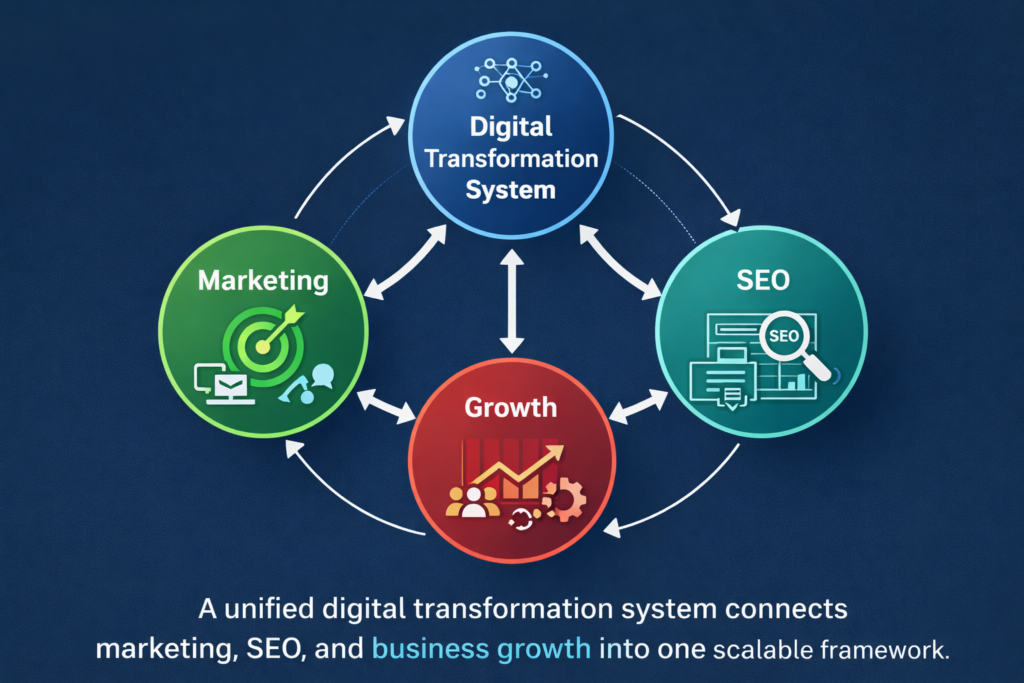
Table of Contents
Why Modern Businesses Still Struggle to Solve Problems
Despite rapid digital adoption, many organizations continue to face recurring issues across operations, marketing, and growth.
Teams implement tools, automate processes, and launch new initiatives, yet core problems persist or evolve rather than disappear.
The primary reason is fragmentation. Departments often operate with separate data, disconnected workflows, and isolated decision-making processes.
Problems are addressed locally instead of systemically, which creates temporary fixes rather than durable solutions.
Another challenge is speed. Modern markets change faster than traditional problem-solving models can respond.
By the time analysis is complete, conditions have shifted, making earlier solutions partially obsolete.
As a result, businesses fall into a cycle of continuous reaction instead of structured resolution.
The Hidden Reason Most Problem-Solving Efforts Fail
Most business problem-solving initiatives fail not because of poor effort, but because of missing structure. Organizations tend to treat symptoms rather than underlying system causes.
For example, declining performance may be addressed through marketing changes, staffing adjustments, or new tools.
However, if the root cause lies in misaligned processes or fragmented data, these actions cannot produce lasting improvement.
Traditional problem solving often relies on linear analysis: identify → decide → implement. Modern environments require iterative systems: detect → analyze → adapt → optimize.
Without this structural shift, solutions remain temporary.
What Effective Business Problem Solving Looks Like in 2026
In high-performing organizations, problem solving is no longer an occasional activity — it is an embedded capability.
Teams continuously detect issues through data signals, analyze patterns across systems, and implement coordinated responses.
This approach aligns with the structured methodology described in the Digital Problem Solving Framework for Businesses in 2026, where diagnosis, prioritization, and execution operate as a connected cycle rather than isolated steps.
Effective problem solving also integrates digital tools, analytics, and cross-functional collaboration.
Instead of departments acting independently, solutions emerge from shared visibility and coordinated action.
The Structured Digital Problem-Solving System
Modern businesses solve problems through structured digital systems that connect data, workflows, and decision logic. These systems allow organizations to move from reactive fixes to predictable resolution.
A structured system typically includes:
- unified data visibility
- standardized diagnostic methods
- solution prioritization logic
- coordinated execution workflows
- continuous feedback loops
Together, these elements transform problem solving into an operational capability rather than a situational response.
The 3 Pillars of Structured Digital Problem Solving

Modern business problem solving is no longer about isolated fixes or quick solutions.
Sustainable resolution emerges when organizations build a structured system that diagnoses root causes, designs aligned solutions, and continuously improves performance.
This structured approach rests on three foundational pillars that transform reactive problem solving into a scalable business capability.
Pillar 1 — Diagnosis Intelligence
Effective problem solving begins with clarity.
Many businesses attempt to solve visible symptoms rather than underlying structural issues.
Diagnosis intelligence ensures that problems are mapped across processes, data flows, customer journeys, and operational systems before solutions are designed.
Organizations that invest in diagnostic analysis reduce wasted effort, avoid misaligned initiatives, and identify the true leverage points that drive measurable improvement.
Pillar 2 — Solution Architecture
Once root causes are understood, solutions must be designed as integrated systems rather than disconnected actions.
Solution architecture aligns technology, workflows, teams, and decision processes into a cohesive resolution framework.
This pillar transforms problem solving from ad-hoc interventions into structured implementation, ensuring that fixes address systemic causes rather than temporary effects.
Pillar 3 — Continuous Optimization
Business environments evolve continuously, meaning solutions must adapt over time.
Continuous optimization embeds monitoring, feedback loops, and performance measurement into the problem-solving process.
Instead of treating resolution as a one-time event, organizations develop an adaptive capability that learns, refines, and improves outcomes with each cycle.
Why the 3-Pillar Model Matters
When diagnosis intelligence, solution architecture, and continuous optimization operate together, problem solving shifts from reactive firefighting to proactive capability building.
Businesses gain faster resolution cycles, lower operational friction, and sustainable performance improvement across functions.
This structured model forms the foundation of modern digital problem solving in 2026 and beyond.
How Smart Digital Solutions Accelerate Problem Resolution

Digital solutions alone do not solve problems — but when embedded in structured systems, they dramatically accelerate resolution speed and accuracy.
Automation reduces response time. Analytics improves diagnosis precision. Integration eliminates information gaps.
Collaboration tools synchronize execution across teams.
As highlighted in Smart Digital Solutions: How Businesses Solve Problems Faster in 2026, organizations that combine digital tools with structured workflows resolve issues faster and prevent recurrence.
The advantage lies not in technology itself, but in how technology connects processes and decisions.
Signs Your Business Needs a Structured Problem-Solving System
Many organizations recognize the need for structured problem solving only after persistent inefficiencies appear.
Several signals typically indicate systemic gaps:
- recurring operational issues
- repeated strategic resets
- siloed decision-making
- slow issue resolution
- inconsistent performance
These symptoms reflect structural fragmentation rather than isolated failures. Without systemic alignment, problems multiply instead of resolve.
Building a Continuous Problem-Solving Capability
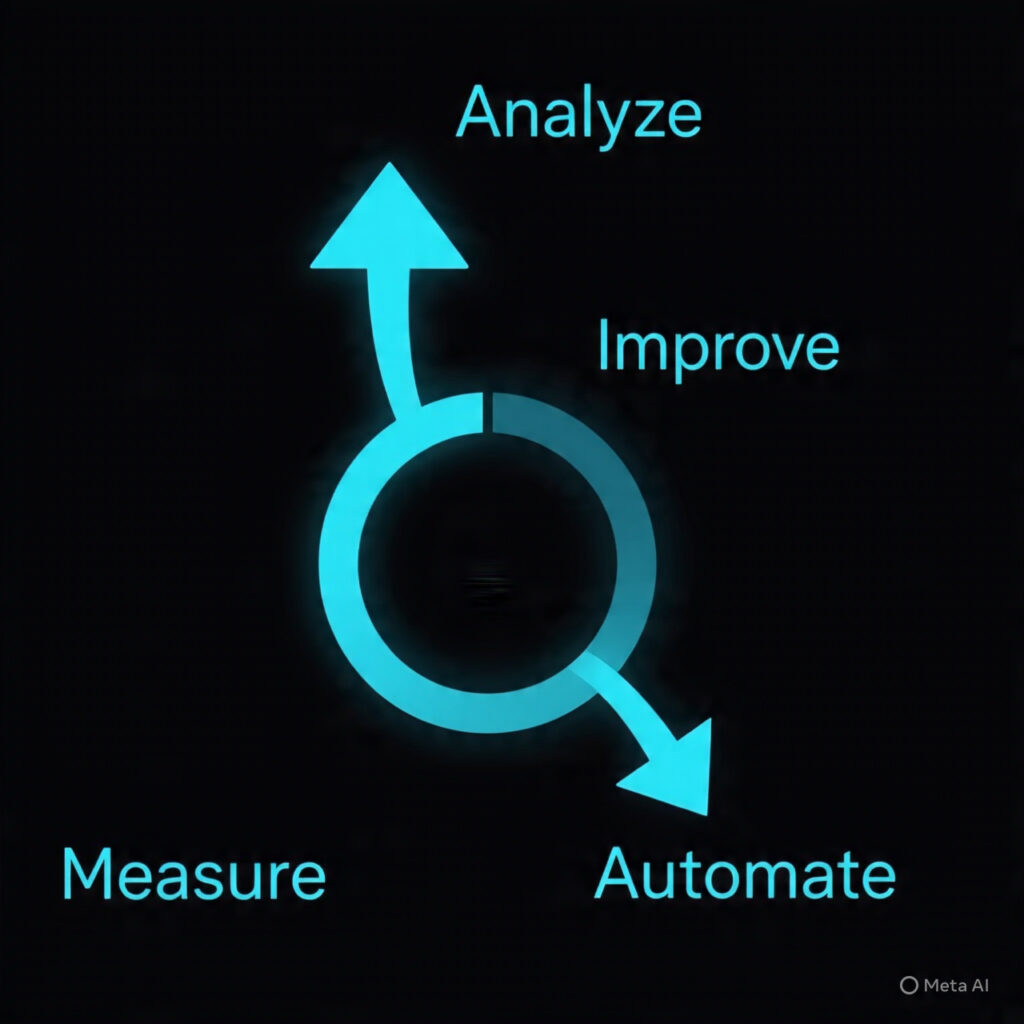
The most advanced organizations treat problem solving as a continuous capability embedded within operations.
Rather than episodic initiatives, they establish ongoing detection, analysis, and improvement cycles.
This capability emerges when systems connect strategy, processes, data, and execution. Over time, organizations shift from reacting to problems toward preventing them.
Continuous problem solving does not eliminate challenges — but it ensures they are resolved faster, more accurately, and with lasting impact.
Leave a Reply