
Digital problem solving helps businesses identify challenges and analyze data effectively.
By using smart tools and structured strategies, companies can improve decision-making and long-term performance.
In today’s digital environment, businesses face complex challenges
To understand the complete step-by-step approach, explore our our Digital Problem Solving Framework. That require structured and data-driven solutions. Digital problem solving focuses on using technology, analytics, and logical frameworks to understand root causes, improve decision-making, and create scalable solutions that support long-term business growth.
Table of Contents
What Is Digital Problem Solving?
Smart digital solutions is the process of identifying business challenges and addressing them through digital tools, data analysis, and structured frameworks. Instead of relying on guesswork or manual methods, it uses technology to understand root causes, optimize processes, and implement smarter solutions. This approach enables businesses to make informed decisions, improve efficiency, and adapt quickly to changing market demands.
Common Business Problems That Need Smart Solutions
Modern businesses face a range of challenges that cannot be solved effectively with traditional methods alone. Common problems include inefficient workflows, lack of real-time data, poor customer experience, slow decision-making, and scalability issues. Many businesses also struggle with disconnected systems, manual processes, and an inability to adapt to rapid digital changes. Smart digital solutions help businesses identify these gaps, streamline operations, and create systems that are more agile, data-driven, and future-ready.
Core Pillars of Smart Digital Solutions
Smart digital solutions are built on a few foundational pillars that work together to solve business problems effectively. Ignoring any one of these pillars can limit results, even if the right tools are in place. Successful digital problem solving requires a balanced approach that combines strategy, technology, and continuous improvement.
Strategy & Planning
Every smart digital solution starts with a clear strategy. Businesses must define their goals, understand their challenges, and align digital efforts with long-term objectives. Strategic planning ensures that technology is used purposefully rather than as a quick fix.
Technology & Automation
Technology enables businesses to automate repetitive tasks, improve efficiency, and reduce human error. Automation tools help streamline workflows, save time, and allow teams to focus on higher-value activities that drive growth.
Data & Insights
Data-driven decision-making is a critical pillar of digital problem solving. By analyzing performance data, user behavior, and operational metrics, businesses gain insights that help them identify issues early and optimize processes continuously.
User Experience
Smart solutions must prioritize user experience, whether for customers or internal teams. Systems that are intuitive, accessible, and responsive improve adoption, engagement, and overall effectiveness.
Continuous Optimization
Digital solutions are not one-time implementations. Continuous testing, monitoring, and optimization ensure that systems evolve with changing business needs and market conditions.
Digital Problem Solving Framework (Smart Solve Method)
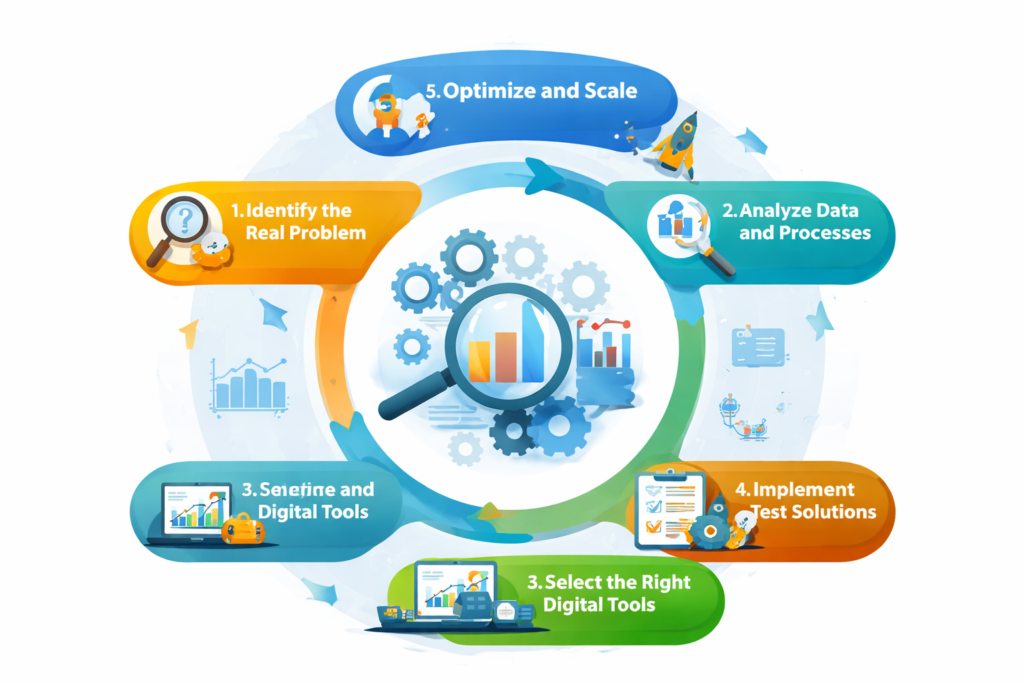
A structured framework helps businesses approach problems logically instead of reacting impulsively. The Smart Solve Method focuses on understanding issues deeply and implementing digital solutions that are scalable and measurable.
1. Identify the Real Problem
The first step is to clearly define the problem. Many businesses treat symptoms instead of root causes. Identifying the real issue ensures that digital solutions address the core challenge rather than temporary gaps.
2. Analyze Data and Processes
Once the problem is identified, businesses must analyze existing data, workflows, and systems. This step reveals inefficiencies, bottlenecks, and opportunities for improvement using digital tools and insights.
3. Select the Right Digital Tools
Not every tool fits every problem. Choosing the right technology—whether automation, analytics, or collaboration tools—ensures solutions remain effective and aligned with business goals.
4. Implement and Test
Solutions Implementation should be gradual and measurable. Testing solutions on a smaller scale helps businesses evaluate performance, reduce risk, and make adjustments before full deployment.
5. Optimize and Scale
Digital problem solving is an ongoing process. Continuous optimization allows businesses to refine solutions, adapt to changes, and scale successful systems for long-term growth.
Real-World Examples (Conceptual)

Digital problem solving can be applied across different business areas, regardless of industry size or type. For example, a growing business struggling with manual operations can use automation tools to streamline workflows, reduce errors, and save time. By digitizing repetitive tasks, teams can focus more on strategy and innovation rather than daily operational issues.
Another common example is customer experience improvement. Businesses facing low engagement or poor retention often use data analytics and digital platforms to understand user behavior. These insights help optimize websites, personalize communication, and improve overall user journeys, leading to stronger relationships and higher satisfaction.
In decision-making, many businesses rely on assumptions instead of real data. Digital problem solving introduces dashboards, performance tracking, and reporting systems that provide real-time insights. This enables leaders to make informed decisions, respond faster to challenges, and plan future growth with confidence.
Tools & Technologies That Enable Smart Solutions

Digital problem solving relies on the right mix of tools and technologies to turn strategy into action. These tools help businesses automate processes, analyze data, and improve collaboration across teams. Instead of using technology randomly, smart solutions focus on selecting tools that directly address specific business challenges.
Automation platforms reduce manual work and increase efficiency by streamlining repetitive tasks. Analytics tools provide valuable insights into performance, customer behavior, and operational gaps. Collaboration and project management tools help teams stay aligned, improve communication, and execute solutions more effectively. Together, these technologies create a digital ecosystem that supports smarter decision-making and scalable growth.
Choosing the right tools is not about adopting every new technology but about using solutions that integrate well with existing systems and support long-term business objectives.
Why Long-Term Digital Strategy Matters
A long-term digital strategy ensures that problem solving efforts remain consistent, scalable, and aligned with business goals. Short-term fixes may deliver temporary relief, but they often fail to address underlying issues or support sustainable growth. A strategic approach helps businesses build systems that evolve with changing market conditions and customer expectations.
By focusing on long-term digital planning, businesses can improve efficiency, reduce operational risks, and make better use of technology investments. A clear strategy also enables teams to measure progress, learn from data, and continuously optimize solutions over time. Ultimately, a long-term digital strategy transforms problem solving from a reactive task into a proactive growth engine.
Final Thoughts: Building Smarter Businesses
Digital problem solving is no longer optional for modern businesses—it is a necessity. As technology continues to shape how businesses operate and compete, adopting a structured, digital-first approach to problem solving becomes essential for long-term success. Businesses that invest in smart solutions are better equipped to adapt, innovate, and grow sustainably.
By combining strategy, technology, data, and continuous optimization, digital problem solving helps businesses move beyond short-term fixes and build resilient systems. A thoughtful digital approach not only solves existing challenges but also prepares businesses for future opportunities in an increasingly digital landscape.