
Digital visibility system is the real reason most businesses either get discovered or remain invisible in today’s digital landscape.
They fail because they remain invisible.
They publish content. They create offers. They show up online.
Yet customers never find them.
In 2026, visibility is no longer about posting more — it is about building a discoverability system.
And most businesses never build one.
This is why some brands appear everywhere,while others remain unknown no matter how hard they try.
This guide explains why businesses stay invisible — and the exact visibility system that changes it.

Table of Contents
The Real Reason Most Businesses Stay Invisible
Most businesses today do not struggle because they lack effort, ideas, or marketing activity. They struggle because they operate without a visibility structure.
Content is created. Campaigns are launched. Platforms are used. But none of these actions are connected into a discoverability system.
As a result, businesses remain scattered across channels instead of becoming consistently findable.
Visibility is not created by doing more marketing. Visibility is created when search presence, content authority, and positioning work together.
Without this integration, even high-quality brands remain invisible to the people actively searching for them.
In 2026, the competitive advantage is no longer who creates more content. It is who builds structured visibility.
Why Marketing Alone Cannot Create Visibility
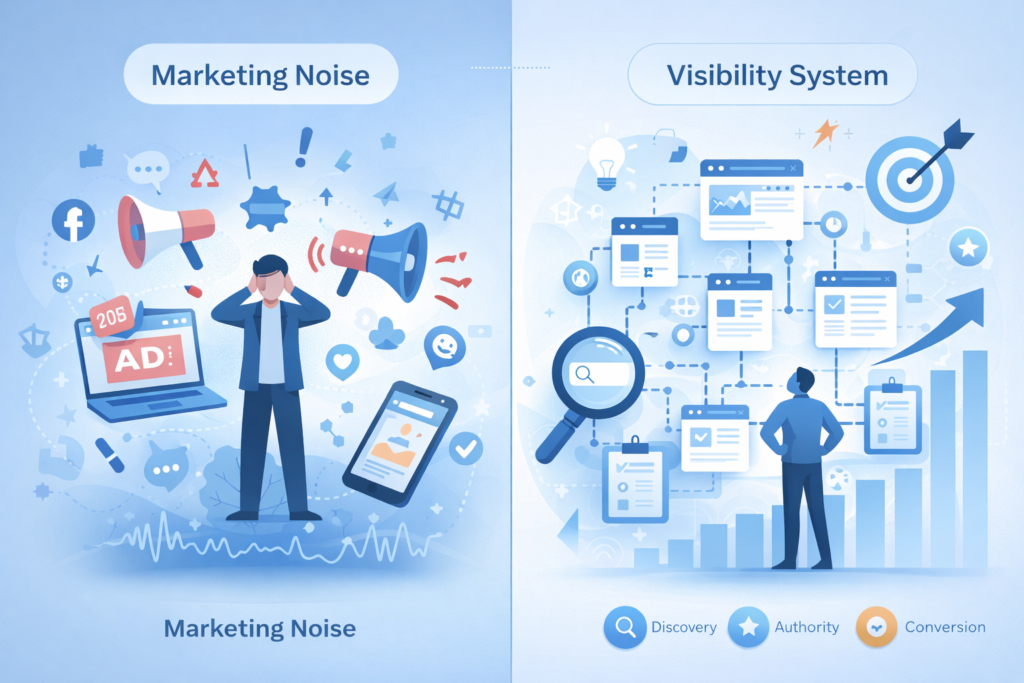
Marketing today is louder than ever. Brands post daily, run ads, share updates, and publish content across multiple platforms.
Yet increased activity does not automatically create visibility.
Marketing generates reach. But visibility requires sustained discoverability.
A campaign may create temporary attention.A post may generate short-term engagement.But without structural search presence and authority signals, that attention fades quickly.
This is why many businesses feel they are constantly “starting over” with every new campaign.
Marketing works in bursts. Visibility works in continuity.
When marketing operates without a supporting visibility system, results reset instead of compounding.
In contrast, businesses that integrate marketing into a structured visibility framework experience cumulative growth — where each action strengthens long-term discoverability rather than replacing it.
The 3 Layers of Digital Visibility
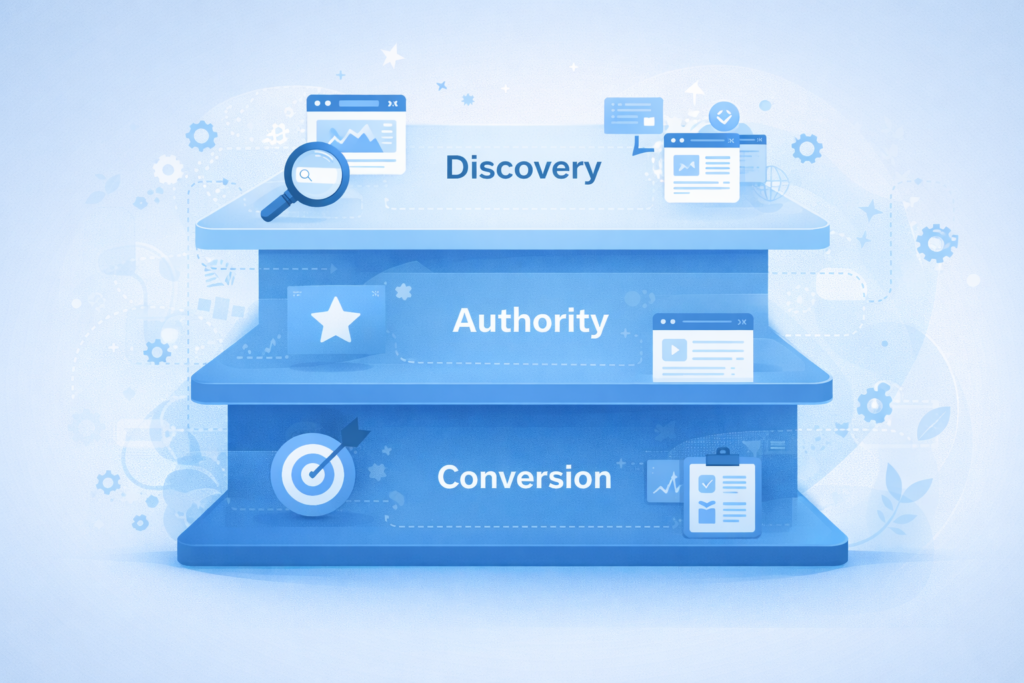
Digital visibility is not created by a single channel. It emerges when multiple layers of presence reinforce each other.
Most businesses operate in only one layer — usually social or advertising. But sustainable discoverability requires a structured combination of three distinct visibility layers.
1. Search Visibility
Search visibility determines whether a brand can be found when demand already exists.
When people actively look for solutions, answers, or services, search-driven visibility places a brand directly in front of intent.
This layer includes organic search presence, evergreen content, and topic authority.
Search visibility compounds over time — each page, article, and keyword strengthens long-term discoverability.
Without search visibility, brands remain dependent on continuous promotion to be seen.
2.Authority visibility
Authority visibility determines whether a brand is trusted once discovered.
Modern audiences evaluate credibility quickly. They look for expertise signals, depth of knowledge, and consistency of positioning.
Authority is built through structured content ecosystems, topical depth, and aligned messaging across channels.
When authority visibility is strong, audiences perceive the brand as a reliable source rather than just another option.
This layer transforms attention into trust.
3. Conversion Visibility
Conversion visibility determines whether attention becomes action.
Even visible and trusted brands fail if pathways to engagement are unclear.
Conversion visibility includes clear positioning, aligned offers, and frictionless next steps for the audience.
It ensures that when discovery and trust occur, progression naturally follows.
This layer transforms trust into measurable growth.
True digital visibility appears only when all three layers operate together.
Search creates discovery. Authority creates trust. Conversion creates action.
When these layers integrate, visibility stops fluctuating and begins compounding — turning presence into predictable demand.
What a True Visibility System Looks Like
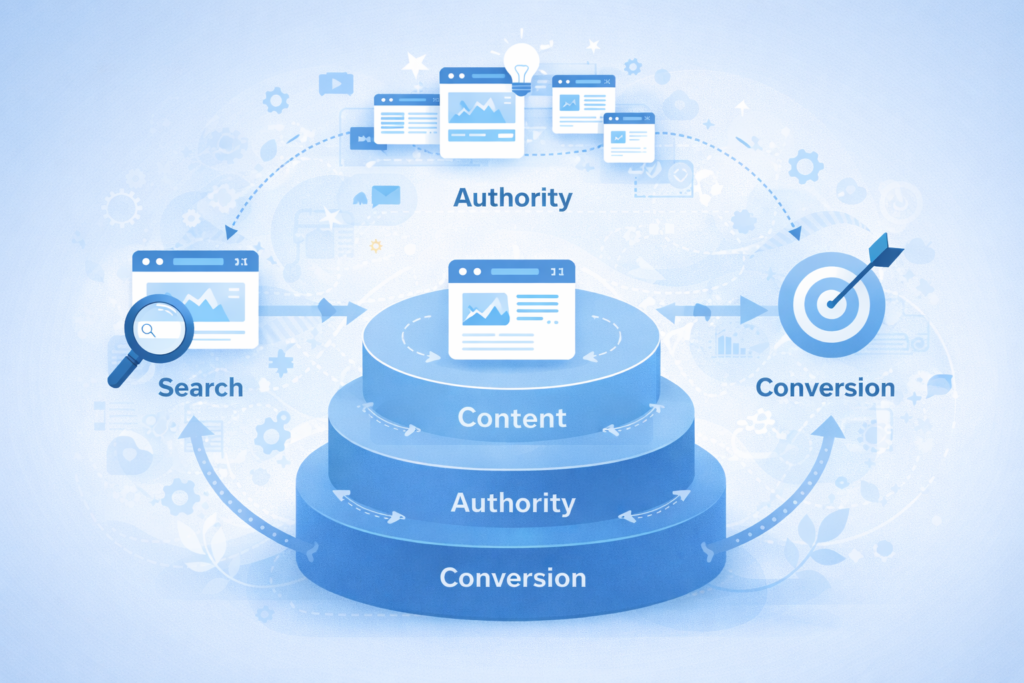
A true visibility system is not a collection of marketing activities. It is an integrated structure where discovery, trust, and conversion continuously reinforce each other.
Most brands operate in campaigns.Visibility systems operate in cycles.
In campaigns, attention spikes and disappears. In systems, attention compounds and stabilizes.
A true visibility system has three defining characteristics.
Continuous Discovery
Content, search presence, and topic coverage ensure the brand is consistently findable.
New audiences enter the ecosystem without active promotion because discovery channels remain active over time.
Visibility no longer depends on posting frequency or advertising spend.
Reinforced Authority
Every piece of content connects to a larger expertise structure.
Instead of isolated posts, the brand builds depth around core themes, perspectives, and solutions.
This repetition with expansion strengthens credibility and recognition.
Audiences begin to associate the brand with specific expertise domains.
Guided Conversion
Clear pathways exist from awareness to engagement.
Content naturally leads toward deeper resources, offers, or next steps aligned with audience needs.
Rather than forcing conversion, the system enables progression.
When these three functions operate together, visibility shifts from effort-based to infrastructure-based.
Discovery continues. Authority deepens. Conversion flows.
This is what differentiates brands that remain visible from those that repeatedly restart attention.
How Smart Businesses Build Discoverability
Smart businesses do not chase attention.They engineer discoverability.
Instead of relying on single channels or sporadic campaigns, they construct visibility ecosystems designed to be found repeatedly.
Discoverability is built through structured presence, not volume.
There are four core practices that consistently visible brands implement.
Topic Ownership
They define clear problem and solution territories they want to be known for.
Content, messaging, and positioning repeatedly reinforce these themes.
Over time, audiences associate the brand with specific expertise areas.
The brand becomes searchable by topic, not just by name.
Search-Aligned Content
They create content aligned with real audience queries, needs, and decision stages.
Educational, comparative, and solution-focused content ensures presence across the discovery journey.
Search visibility compounds because content addresses enduring questions rather than temporary trends.
Traffic becomes cumulative instead of episodic.
Structured Content Networks
Content pieces connect to each other intentionally.
Articles reference related insights, deeper guides, and supporting perspectives.
This internal connectivity strengthens both search signals and user understanding.
Instead of scattered posts, the brand builds knowledge architecture.
Consistent Signal Reinforcement
Positioning, messaging, visuals, and expertise themes remain stable across platforms.
Audiences encounter the same value promise repeatedly in different contexts.
Recognition grows because signals are coherent, not fragmented.
The brand becomes mentally retrievable even before search occurs.
Discoverability does not emerge from activity.It emerges from structure.
Brands that build discoverability systems reduce dependence on promotion and increase inevitability of discovery.
They are not louder. They are easier to find.
From Invisible to In-Demand: The Visibility Shift
The transition from invisibility to demand does not happen through a single tactic.It occurs when visibility stops being accidental and becomes intentional.
Invisible businesses rely on isolated actions.Visible businesses operate through integrated systems.
This shift changes how audiences encounter and remember a brand.
Instead of sporadic exposure, visibility becomes continuous. Instead of occasional trust, authority becomes stable. Instead of uncertain interest, demand becomes predictable.
Over time, three noticeable changes emerge.
Discovery Becomes Consistent
The brand begins appearing in search results, recommendations, and content pathways regularly.
New audiences encounter it without direct promotion.
Visibility moves from effort-driven to presence-driven.
Trust Builds Before Contact
Prospects arrive already informed and confident.
They have consumed content, understood positioning, and recognized expertise.
The brand is perceived as a known authority rather than an unknown option.
Demand Replaces Outreach
Instead of chasing attention, attention begins to flow toward the brand.
Inbound inquiries increase. Engagement deepens. Conversion friction decreases.
The business shifts from seeking visibility to managing demand.
This is the visibility shift.
It does not require louder marketing or constant activity. It requires structural discoverability.
When discovery, authority, and conversion integrate, invisibility dissolves — and demand becomes the natural outcome of presence.
Conclusion: Visibility Is Not Promotion — It Is Infrastructure
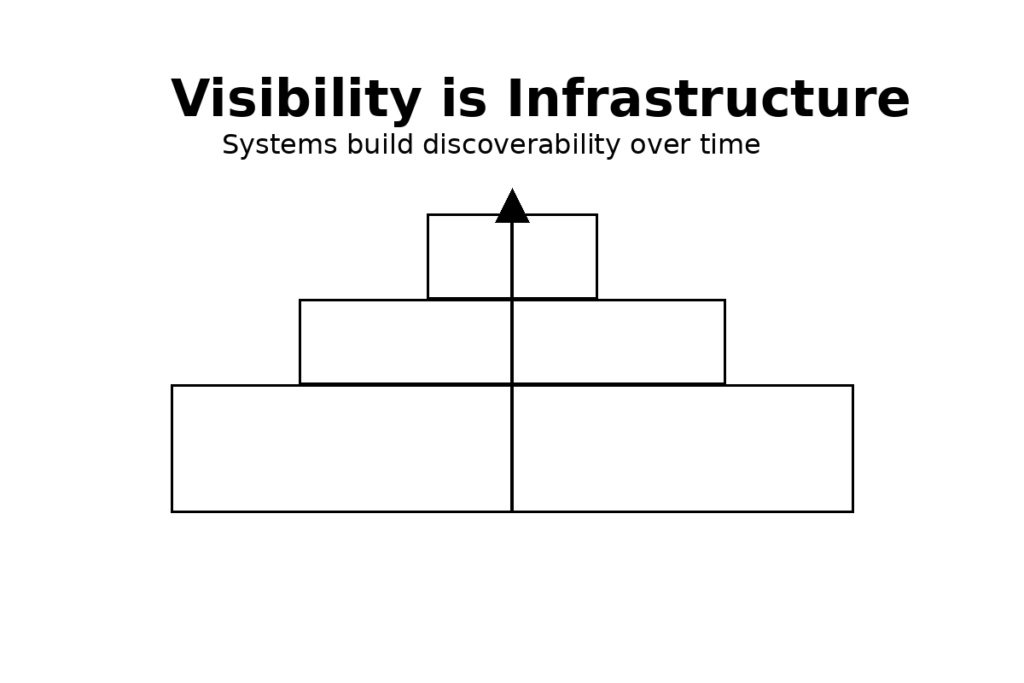
Most businesses approach visibility as a promotional activity. They attempt to become visible by increasing output, frequency, or advertising.
But visibility that depends on constant promotion is unstable by nature.
True visibility behaves differently.
It persists beyond individual campaigns. It compounds across content and time. It strengthens recognition and trust with each interaction.
This persistence is not created by activity.It is created by infrastructure.
A visibility infrastructure integrates discovery channels, authority signals, and conversion pathways into a coherent system.
Once established, this system continues generating presence even when active promotion pauses.
This is why some brands remain consistently discoverable while others repeatedly restart attention.
Visibility, in its most durable form, is not marketing intensity. It is structural positioning.
Businesses that recognize this shift stop chasing exposure and begin building discoverability.
And when discoverability becomes structural, invisibility is no longer possible.
Leave a Reply to Why Your Conversions Fluctuate Even When Traffic Increases | Smart Solve Lab Cancel reply